409A Valuation Explained: FMV, Safe Harbor & Costs

If you’re a founder preparing to issue stock options to your team, one term you’ll encounter quickly is the 409A valuation. It might sound like bureaucratic fine print, but understanding it is essential for staying compliant with U.S. tax law, protecting your employees from unexpected penalty exposure, and building a credible, audit-defensible equity program.
This guide covers everything you need to know about 409A, including what 409A valuations are, why startups need a 409A valuation, how the 409A valuation process works, and how to choose the right 409A valuation provider.
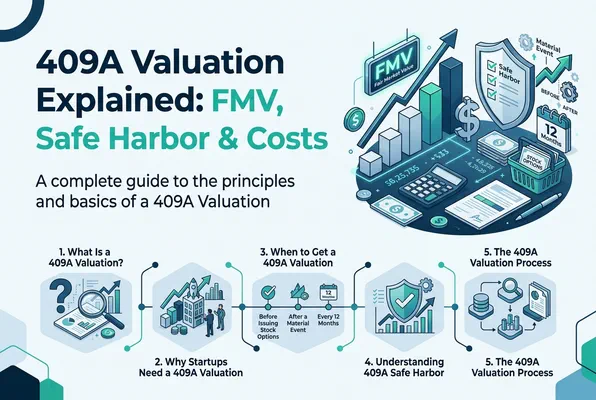
What Is a 409A Valuation?
A 409A valuation is an appraisal used to determine the fair market value (FMV) of a private company’s common stock. More precisely, a 409A valuation is an independent appraisal and an independent valuation that establishes the value of common stock for tax compliance purposes.
Under IRS Section 409A, which governs deferred compensation, the valuation must reflect an appropriate valuation of the business. Section 409A was passed as part of regulatory reforms after abuses in equity compensation practices. The law ensures that the value of the stock is equal to the fair market value at the time options are granted.
A 409A valuation determines the FMV and sets the minimum strike price for each stock option. The valuation also establishes a defensible company’s valuation that can withstand IRS scrutiny.
Importantly, a 409A valuation isn’t the same as a fundraising valuation. While investors focus on preferred equity, the 409A valuation determines the value of the common stock issued to employees.
Why Startups Need a 409A Valuation
Equity compensation is central to how a startup attracts talent. However, startups need a 409A valuation before issuing equity to remain compliant.
If a company issues stock options below FMV, the IRS may impose a penalty and treat the difference as immediate taxable income. This is why a 409A valuation before issuing stock options is essential.
A valid 409A valuation helps companies:
- Avoid risks tied to deferred compensation
- Ensure compliance with IRS rules
- Provide an accepted valuation for auditors
- Build trust with investors
- Support a consistent equity value framework
In short, any startup issuing equity needs a valuation to protect both the company and its employees.
When to Get a 409A Valuation
Before Issuing Stock Options
A company must complete a 409A valuation before issuing stock options for the first time. This applies to early-stage startups and early-stage companies alike.
A 409A valuation before issuing stock establishes the baseline value of the business and ensures all equity grants are compliant.
After a Material Event
A material event can significantly impact the value of the company. Examples include:
- A new funding round
- A major shift in financial projections
- A strategic partnership
- An acquisition offer
After such events, the prior 409A valuation is no longer valid. A new 409A valuation is required before issuing additional equity.
Every 12 Months
Even without major changes, a 409A valuation is valid for only 12 months. Companies must perform a 409A valuation every 12 months to maintain compliance and preserve safe harbor protection.
Understanding 409A Safe Harbor
Safe harbor is one of the most important protections within Section 409A.
Achieving 409A safe harbor means the IRS presumes your valuation is reasonable. If challenged, the burden of proof shifts to the IRS.
The most common way to qualify is through an independent 409A valuation conducted by a qualified valuation firm. This approach reflects best 409A practices and provides strong audit protection.
The 409A Valuation Process
The 409A valuation process typically includes several steps:
- Data collection
The company provides financial statements, projections, cap table details, and other relevant information. - Analysis and modeling
The valuation provider performs the valuation using appropriate valuation methodologies. - Allocation of equity
The total equity value is allocated across share classes to determine the FMV of common stock. - Report delivery
A formal 409A valuation report is issued, documenting assumptions, methods, and conclusions.
To perform the valuation accurately, providers rely on structured valuation methodologies and multiple inputs.
Valuation Methodologies Used
Valuation providers often use different approaches depending on the company’s stage.
Market Approach
The market approach compares the company to comparable publicly traded companies. This method is common for startups and private companies, especially after funding rounds.
Data from public companies is used in the analysis to estimate enterprise value.
Income Approach
The income approach estimates future cash flows and discounts them to present value. It is more common for mature companies with predictable revenue.
Asset Approach
The asset-based method focuses on the net value of assets and liabilities. It is typically used for very early-stage startups.
In practice, a valuation provider may combine multiple methods to arrive at an appropriate valuation.
409A Valuation vs. Fundraising Valuation
Understanding 409A valuation vs fundraising valuation is critical.
A 409A valuation determines the value of the common stock, while a fundraising valuation reflects what an investor pays for preferred shares.
Because preferred equity includes additional rights, the fundraising valuation is usually higher than the current valuation used for compliance purposes.
Choosing a 409A Valuation Provider
Selecting the right 409A provider is an important decision.
When evaluating a valuation provider, consider:
- Independence (required for an independent 409A valuation)
- Experience with startups and private companies
- Quality of valuation services
- Ability to deliver an accepted valuation
- Audit readiness
A strong 409A valuation firm will help companies maintain compliance and build a defensible valuation history.
Costs and Considerations
The 409A valuation cost varies depending on company complexity and stage. Some valuation providers offer bundled 409A valuation services, while others charge per report.
A valuation provider may adjust pricing based on the scope of work, but the goal remains consistent: to deliver an accurate and defensible valuation.
Additional Considerations for Startups
Early-stage startups often face unique challenges when completing a 409A valuation. Limited financial history, evolving business models, and uncertain projections can all impact the valuation.
Despite these challenges, a 409A valuation helps establish credibility. It demonstrates that the company follows structured processes and adheres to regulatory expectations.
A 409A valuation also plays a role in long-term planning. As the company grows, each new valuation builds a historical record that supports future fundraising and liquidity events.
Final Thoughts
A 409A valuation is more than a compliance requirement, it is a critical component of a company’s equity strategy.
By maintaining a current valuation, working with a qualified valuation provider, and following established 409A practices, companies can ensure compliance and protect their teams.
Whether you’re preparing your first stock option grants or updating your last 409A valuation, understanding the process helps you make informed decisions and avoid unnecessary risk.
Frequently Asked Questions
How long is a 409A valuation valid?
A 409A valuation is valid for up to 12 months from its effective date. However, it becomes invalid sooner if a material event occurs, such as a new funding round, an acquisition offer, or a significant change in financial projections. Whenever your prior 409A valuation expires or is invalidated, you’ll need a new one before issuing additional stock options.
Who can perform a 409A valuation?
A 409A valuation must be performed by a qualified, independent appraiser, typically a valuation firm with at least five years of experience in business valuations, financial accounting, investment banking, or private equity. To achieve safe harbor status with the IRS, the valuation must be conducted by a third party with no financial interest in the outcome.
How much does a 409A valuation cost?
The cost of a 409A valuation varies widely depending on company stage and complexity. Standalone valuations from traditional valuation firms typically range from $1,000 to over $10,000. Some equity management platforms bundle 409A valuation services into their subscription fees, which can make compliance more cost-predictable for early-stage startups.
What is the difference between a 409A valuation and a fundraising valuation?
A 409A valuation determines the fair market value (FMV) of a private company’s common stock for tax compliance purposes, specifically to set the strike price of employee stock options. A fundraising valuation reflects what investors are willing to pay for preferred stock. Because preferred shares carry additional rights like liquidation preferences, the fundraising valuation is typically higher than the 409A FMV.
FAQ
How long is a 409A valuation valid?
Who can perform a 409A valuation?
How much does a 409A valuation cost?
What is the difference between a 409A valuation and a fundraising valuation?
Written by
Dominik KonoldCEO & Founder
Dominik Konold is the CEO and founder of Finidy GmbH, specializing in share-based compensation and treasury accounting. With a background in audit and investment banking, he is a certified Professional Risk Manager (PRMIA) and lectures for the Association of Public Banks and the Academy of International Accounting.
Related Posts
409A Valuation: Complete Guide to Section 409A
Understand everything you need to know about 409A valuations — what they are, why they matter, how they work, and how to stay compliant with IRS Section 409A rules. A complete guide for startups and private companies.

Accelerated Vesting: How to Accelerate Your Vesting Schedule for Stock Options & Restricted Stock
This guide explains accelerated vesting, including single- and double-trigger acceleration, vesting schedules, equity grants, and what happens to employee equity during major corporate events.
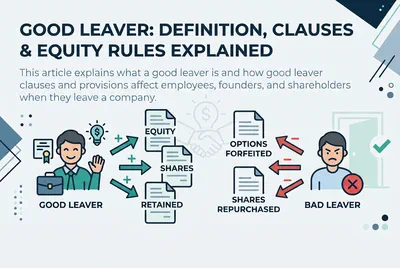
Good Leaver: Definition, Clauses & Equity Rules Explained
This article explains what a good leaver is and how good leaver clauses and provisions affect employees, founders, and shareholders when they leave a company.
Ready to simplify your equity programs?
See how Incentrium helps you manage share-based compensation with ease. Book a demo to learn more.
Book a Demo