Cap Table Guide: What It Is & How It Works | Incentrium

A cap table is one of the most important documents your company will ever maintain. Yet many founders treat it as an afterthought — until a funding round, audit, or employee dispute forces them to reckon with a messy, outdated record. Whether you’re incorporating your first startup or preparing for a Series B, understanding how cap tables work is essential for making informed decisions about your company’s future.
This guide covers everything you need to know: what a cap table is, what it should include, how to create one, and how to manage it as your company grows.
What Is a Cap Table?
A cap table — short for capitalization table — is the official record of equity ownership in a company. It documents who owns what, in what form, and in what proportion. Every shareholder, investor, and employee with equity appears on the cap table, along with the type of security they hold and their ownership percentage.
A capitalization table is a spreadsheet at its simplest, but it quickly evolves into something far more complex. As a startup raises funding rounds, issues employee stock options, and brings on new investors, the cap table becomes the single source of truth for understanding the company’s ownership structure.
In finance, the cap table answers a fundamental question: if this company were sold or went public today, who gets paid, how much, and in what order?
What Should a Cap Table Include?
A well-maintained cap table typically contains several key categories of information. Here’s what a cap table should include:
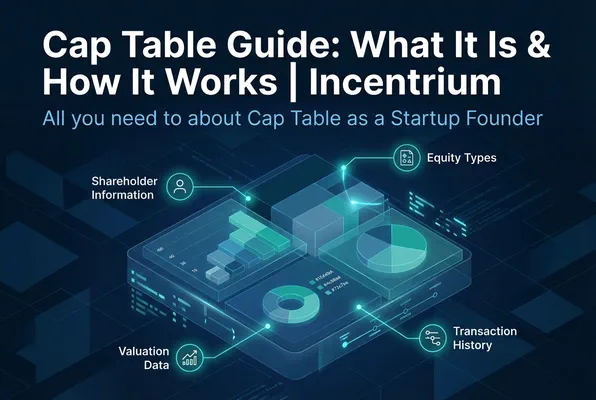
Shareholder Information
The cap table lists every stakeholder with an ownership stake in the company. This includes:
- Founders — usually holding common shares from incorporation
- Investors — angel investors, venture capitalists, and institutional funds holding preferred shares
- Employees and advisors — holding stock options or restricted shares through an employee stock option pool
Each entry includes the shareholder’s name, their role, and the type of equity they hold.
Equity Types and Share Classes
Not all equity is equal. A cap table distinguishes between:
- Common shares — typically held by founders and early employees
- Preferred shares — issued to investors during a financing round, often with special rights like liquidation preference and anti-dilution protections
- Employee stock options — the right to purchase shares at a fixed price in the future
- Warrants — similar to options but often issued to investors or lenders
- Convertible notes or SAFEs — instruments that convert into equity at a future financing round; SAFEs (simple agreements for future equity) are especially common among early-stage startups
Ownership Percentage and Share Counts
The cap table shows the total number of shares outstanding for each security type, the total number of shares on a fully diluted basis (including options and convertibles), and the resulting ownership percentage for every stakeholder.
The fully diluted view is critical. It shows what ownership percentages look like if all options, warrants, and convertible instruments are exercised or converted — giving a realistic picture of the company’s equity ownership.
Valuation Data
Cap tables often include valuation information tied to each financing round, such as:
- Pre-money and post-money valuation
- Share price per class
- Valuation cap for convertible notes or SAFEs
This data helps investors and founders understand the monetary value behind each ownership stake.
Transaction History
Every event that changes the cap table — issuing shares, granting options, converting SAFEs, or transferring equity — should be recorded chronologically. This transaction log serves as the legal record of equity ownership and is essential during due diligence and audits.
How Does Cap Table Dilution Work?
Dilution is one of the most misunderstood aspects of startup equity. When a company issues new shares, whether to raise capital or grow its employee stock option pool, existing shareholders’ ownership percentage decreases. This is dilution.
For example, if a founder owns 1,000,000 shares out of 2,000,000 total shares outstanding, they own 50% of the company. If the company issues 1,000,000 new shares in a funding round, the founder now owns 1,000,000 out of 3,000,000 shares — just 33%.
Dilution is normal and expected. The key is to plan for it strategically. A cap table helps founders model dilution scenarios before issuing new shares, so they can negotiate funding terms with full awareness of the equity impact.
Waterfall Analysis: Modeling Exit Scenarios
One of the most powerful uses of a cap table is running a waterfall analysis. This models how proceeds would be distributed among all shareholders in a liquidity event, such as an acquisition, merger, or initial public offering.
The waterfall analysis accounts for liquidation preferences attached to preferred shares, which determine the order and amount in which investors get paid before common shareholders. A cap table with clearly documented share classes and investor rights makes this analysis straightforward; a poorly maintained one can lead to disputes and costly legal complications.
How to Create a Cap Table
Start with a Spreadsheet
Many early-stage startups begin with a simple cap table on a spreadsheet. A basic cap table template should include:
- Total authorized shares
- Founders’ equity with vesting schedules
- Investor equity from each funding round
- Option pool size and allocations
- Outstanding convertible notes or SAFEs
- Ownership percentage for each stakeholder
For a very early startup with two co-founders and no outside investment, a spreadsheet is perfectly adequate. List each founder’s name, share count, and ownership percentage. That’s your starting cap table.
Add Investors and Update After Each Round
Each time you close a financing round, you must update the cap table to reflect new share issuances, the new share price, updated ownership percentages after dilution, and any changes to the option pool.
Investors will expect to see a clean, accurate cap table before committing capital. A messy or outdated cap table is a serious red flag during due diligence.
Create and Maintain an Option Pool
An employee stock option pool reserves a portion of shares for future hires and advisors. Creating an option pool before a funding round typically dilutes existing shareholders. Including the option pool in your cap table from the start ensures transparency and prevents confusion about actual ownership percentages down the line.
Cap Table Management: Best Practices
Keep It Updated in Real Time
The cap table must be updated every time equity changes hands or new securities are issued. This includes new hires receiving option grants, employees exercising options, convertible instruments converting to equity, and any share transfers or cancellations.
Letting the cap table fall out of date creates legal and financial risk. Accurate, real-time records protect founders, investors, and employees alike.
Maintain a Single Source of Truth
One of the most common problems startups face is having multiple versions of their cap table spread across email threads, legal documents, and spreadsheets. Designate a single, authoritative version — and make sure everyone who needs access can find it.
Use Cap Table Management Software
As a startup grows, spreadsheet-based cap tables become difficult to manage accurately. Cap table management software automates updates, tracks transactions, models dilution scenarios, and generates reports for investors and legal teams.
Platforms like Carta are widely used for cap table management, offering features ranging from option pool management to waterfall analysis and investor dashboards. When choosing the right cap table software, consider factors like ease of use, integration with legal workflows, security practices, and how the platform handles your stakeholders’ data.
Prepare for Due Diligence
Investors and acquirers will scrutinize your cap table closely. A clean, well-documented cap table that accurately reflects all rounds of financing, option grants, and convertible instruments demonstrates professionalism and reduces deal friction. Discrepancies between your cap table and legal documents can delay or derail transactions.
Do LLCs Have Cap Tables?
Yes. While cap tables are most commonly associated with C-corporations, LLCs also track equity ownership — typically through membership interest rather than shares. The principles are the same: document who owns what, in what percentage, and under what terms.
Are Cap Tables Public?
No. Cap tables are private documents. They are shared selectively — with investors during due diligence, with attorneys during legal transactions, and sometimes with employees who hold equity. Public companies are required to disclose certain ownership information, but private company cap tables are confidential.
The Bottom Line
A cap table is far more than a spreadsheet — it’s the legal record of your company’s equity ownership, a strategic tool for planning dilution and exit scenarios, and a trust-building document for investors and employees alike. Whether you’re a first-time founder building a cap table from scratch or a scaling startup moving to cap table management software, maintaining an accurate and up-to-date cap table is non-negotiable.
Start clean, stay organized, and update your cap table every time equity changes. Your future self — and your investors — will thank you.
FAQ
What is a Cap Table?
Why is a cap table important for startups?
What information is included in a cap table?
How does a cap table change during fundraising?
How can companies manage their cap table?
Written by
Dominik KonoldCEO & Founder
Dominik Konold is the CEO and founder of Finidy GmbH, specializing in share-based compensation and treasury accounting. With a background in audit and investment banking, he is a certified Professional Risk Manager (PRMIA) and lectures for the Association of Public Banks and the Academy of International Accounting.
Ready to simplify your equity programs?
See how Incentrium helps you manage share-based compensation with ease. Book a demo to learn more.
Book a Demo