Best Equity Management Software for Startups 2026
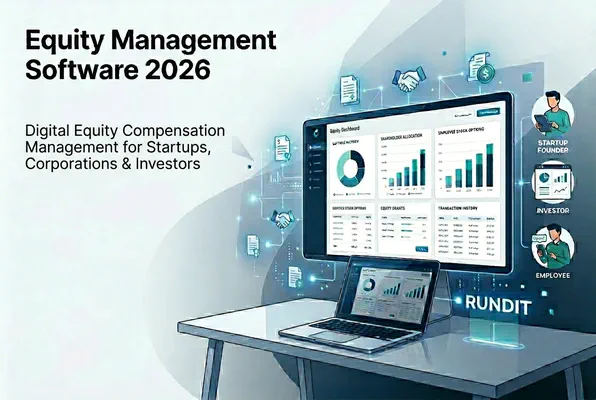

Managing company ownership is one of the most consequential responsibilities a founder takes on. Yet many startups still rely on manual equity processes, disconnected legal documents, and spreadsheets long after those approaches stop being adequate. The right equity management software transforms fragmented processes into a streamlined, compliant, and transparent system that scales with your company.
This guide breaks down what equity management software does, what features actually matter, how the leading platforms compare, and how to choose the right equity management solution for your specific stage and needs.
What Is Equity Management Software and How Does It Work?
Equity management software is a platform that consolidates everything related to a company’s equity into one place: cap tables, stock option grants, vesting schedules, compliance reporting, investor records, and employee-facing equity portals. Instead of juggling spreadsheets, PDFs, and email chains, companies use a single equity management platform to issue grants, model dilution, stay compliant, and give stakeholders real-time access to their equity holdings.
The distinction between simply recording current equity transactions accurately is crucial for compliance and reporting. Recording means storing a snapshot of ownership data within the equity management platform used by startups. Managing means the software automates vesting calculations, models the impact of new funding rounds, maintains compliance with evolving regulations, and gives every equity holder clear visibility into what they own.
For any startup that has issued its first equity grants or taken on outside investment, the case for dedicated equity management software is strong. The longer a company waits, the more complicated and expensive the migration tends to be, especially when considering compliance management.
Why Startups Need Equity Management Software Instead of Manual Cap Tables
Not every equity platform suits every stage of company growth. Here is what matters most when evaluating equity management tools, whether you are choosing your first platform or considering a switch to enhance portfolio management.
Cap Table Management
Cap tables are the foundation of any equity management platform. A well-maintained cap table tracks every shareholder, share class, convertible note, SAFE, and warrant in real time. The best platforms offer version history, investor-ready exports, and instant updates whenever a new equity event occurs, no manual reconciliation required.
Accurate cap table management is especially critical during fundraising. Investors expect clean, current ownership records as part of complete equity management. A cap table that requires hours of preparation before every board meeting is a sign that the underlying equity management process needs an upgrade.
Equity Plan Administration
Comprehensive equity compensation plans are essential for attracting and retaining talent. Compliance management support means the platform can handle ISOs, NSOs, RSUs, RSAs, and employee stock purchase plans, not just basic option grants, ensuring complete equity management. Strong plan administration includes configurable vesting schedule. Solutions to streamline equity include templates, automated cliff and milestone tracking, digital grant agreements, and e-signature workflows.
A platform that handles stock plan administration end-to-end saves significant time for founders and finance teams alike, particularly as headcount grows and the complexity of equity grants increases, making modern equity solutions essential.
Compliance Automation
Compliance management is one of the most underestimated challenges in equity management. Requirements span 409A valuations, ASC 718 stock-based compensation reporting, Form 3921 tax filings, QSBS attestation, 83(b) elections, IFRS 2 expensing for international teams, and country-specific regulatory obligations for companies with global equity programs.
The best equity management platform options build compliance tooling directly into the product rather than treating it as an add-on. Automated compliance reporting reduces audit risk, accelerates due diligence, and ensures that equity events are properly documented from day one, not reconstructed months later.
For companies with internationally distributed teams, effective equity management software built for global compliance is crucial. Platforms that offer automated country-specific compliance reports and modern equity tools to ensure adherence to local regulations. Compliance management support is worth the additional investment for any startup operating across jurisdictions.
Scenario Modeling and Fundraising Tools
Scenario modeling allows founders to simulate how a new funding round, option pool expansion, or SAFE conversion will affect ownership percentages before committing to terms. This capability protects founders from accidentally diluting themselves beyond their intended threshold and helps finance teams present clean, defensible numbers to investors.
This feature tends to be underutilized until the moment it is urgently needed. Having it built into the same platform that manages your cap tables and equity grants means you are always working from current, accurate data.
Employee Equity Portal
An employee equity portal is essential for fostering transparency and understanding equity among team members. It gives team members direct, self-service access to their equity grants, vesting timelines, and current estimated value. Equity compensation only works as a retention and motivation tool when employees understand their current equity holdings.
Platforms like these are designed to simplify the management of equity compensation plans. Ledgy has built its reputation partly on intuitive employee-facing dashboards that make equity compensation tangible for every team member. When employees can log in and see exactly how a funding milestone affects their equity value, equity stops being an abstract line item and starts feeling like meaningful ownership.
Integration and Document Management
Strong equity management platforms integrate with payroll, HRIS, accounting, and e-signature systems. This creates a seamless flow of data between tools, reduces manual input, and keeps equity data synchronized across your tech stack. Built-in document-management is crucial in modern equity management to keep track of all equity ownership records efficiently. Including grant agreements, board consents, and compliance filings keeps everything organized and audit-ready.
Leading Equity Management Platforms Compared
The equity management software market includes solutions to streamline equity for different company sizes, geographies, and complexity levels. Here is how the major options compare.
Carta
Carta is the most widely recognized equity management platform in the US venture ecosystem, serving companies from incorporation through IPO. It offers comprehensive cap table management, 409A valuations, scenario modeling, and fund administration tools for investors. Its breadth and deep integration with the US investor community make it a common choice for Series A companies and beyond, especially those seeking strategic equity.
The trade-off is cost and complexity. Pricing for Carta scales quickly, and smaller startups sometimes find the platform more than they need at early stages. Customer support responsiveness can also vary as companies grow within the platform.
Ledgy
Ledgy is a strong choice for European and internationally distributed companies looking to streamline their equity plans for private companies. Its platform emphasizes the importance of accurate equity feel for all stakeholders involved. Share plan management, HRIS integrations, automated compliance reporting across jurisdictions, and a polished employee equity dashboard. For companies managing equity, choosing the right software providers can make a significant difference in efficiency and compliance management. With teams across multiple countries, Ledgy’s built-in global compliance capabilities significantly reduce the administrative burden of managing international equity.
Ledgy does not offer a free plan, and its pricing is structured for growth-stage and enterprise companies rather than early-stage startups looking to minimize spend.
J.P. Morgan Workplace Solutions
J.P. Morgan Workplace Solutions (formerly Global Shares) is an enterprise-grade equity management solution built for established companies with complex, multinational share plan programs. Its platform supports an extensive range of equity award types, integrates with HR and payroll systems, includes a BI and financial reporting suite, and provides dedicated relationship managers for ongoing support.
Morgan Workplace Solutions is particularly well-suited for late-stage private and public companies navigating complex equity administration across many jurisdictions. The onboarding process averages around eight weeks, and pricing is quote-based, reflecting its positioning for larger organizations rather than early-stage startups.
Incentrium
Incentrium is an equity management platform purpose-built for private companies that want clean, modern solutions. Without unnecessary complexity, modern equity solutions can simplify the management of equity ownership and grants. It provides a centralized home for Grant administration, automated vesting tracking, compliance tooling, and stakeholder reporting, all within an equity software interface designed to be intuitive for founders and finance teams alike.
For scaling startups that need a reliable equity management solution without the overhead of enterprise-grade platforms, Incentrium offers a focused, well-designed alternative. Its approach prioritizes getting equity right from the first grant, so that cap tables, compliance records, and employee-facing equity data stay accurate as the company grows.
Choosing the Right Equity Management Software
The best equity management software for your company depends on a handful of practical factors:
- Stage and size of the company can impact the choice of equity platforms for managing equity effectively and ensuring compliance management: Early-stage startups have different needs than Series B companies preparing for a liquidity event. Match the platform’s complexity to your current reality while evaluating whether it can grow with you.
- Geography: If your team spans multiple countries, prioritize platforms with built-in global equity compliance and international grant support.
- Budget: Some platforms offer free tiers for small stakeholder counts, others are quote-based for enterprise use. Understand total cost of ownership, including any fees for 409A valuations, compliance reports, or additional stakeholders involved in strategic equity compensation plans.
- Integrations: Ensure the platform connects with your existing HRIS, payroll, and accounting tools to avoid creating new data silos.
- Employee experience: A platform with strong cap table features can enhance the management experience. A platform that supports equity across various functions will do more to drive engagement and retention than one that treats equity as an internal-only administrative function, reinforcing the equity feel among employees.
Why Getting Equity Right Matters
Equity is one of the most powerful tools a startup has for attracting talent, rewarding performance, and aligning everyone around essential equity and long-term success. But employee equity only delivers on that promise when it is managed accurately, communicated clearly, and kept in compliance with applicable regulations.
Disorganized cap tables slow down fundraising. Compliance gaps create legal exposure. Employees who cannot understand their equity grants do not feel the motivating effect that equity compensation is designed to create.
The right equity management software does more than reduce administrative burden. It makes equity a genuine strategic asset, one that supports hiring, fundraising, and company growth at every stage. Whether you are issuing your first equity grants or managing a complex, multi-round cap table for hundreds of stakeholders, investing in the right platform is one of the most important operational decisions a founder can make.
Starting with a modern, well-structured equity management platform, rather than waiting until the spreadsheets become unmanageable, is what separates companies that scale equity smoothly from those that spend thousands of dollars and dozens of hours cleaning up avoidable mistakes.
FAQ
What is equity management software?
What is the best equity management software for startups?
How does equity management software help with compliance?
Is equity management software worth it for early-stage startups?
Written by
Dominik KonoldCEO & Founder
Dominik Konold is the CEO and founder of Finidy GmbH, specializing in share-based compensation and treasury accounting. With a background in audit and investment banking, he is a certified Professional Risk Manager (PRMIA) and lectures for the Association of Public Banks and the Academy of International Accounting.
Related Posts
Cap Table Guide: What It Is & How It Works | Incentrium
All you need to about Cap Table as a Startup Founder
Advisory Shares: Complete Guide for Startup Founders
Everything founders, advisors and investors need to know about the scope of application and functioning of advisory shares.
Good Leaver: Definition, Clauses & Equity Rules Explained
This article explains what a good leaver is and how good leaver clauses and provisions affect employees, founders, and shareholders when they leave a company.
Ready to simplify your equity programs?
See how Incentrium helps you manage share-based compensation with ease. Book a demo to learn more.
Book a Demo