IPO Explained: How Initial Public Offerings Work
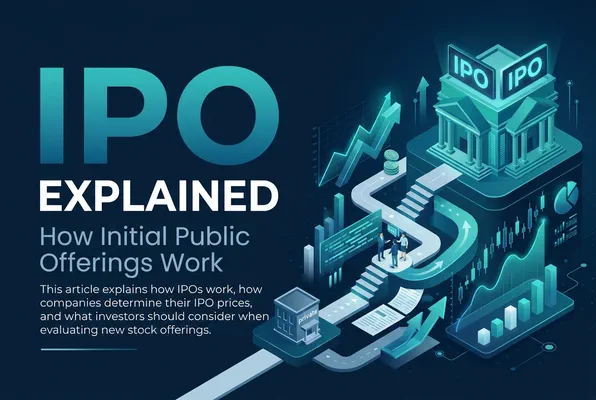

bkaaaaAn IPO, or initial public offering, is one of the most significant milestones in a company’s life. It marks the moment a private business opens its ownership to the public, trades its shares on a stock exchange, and takes on the obligations and opportunities that come with being a listed company. For investors, an IPO can look like a rare chance to get in on the ground floor of a promising business. For founders and early backers, it can be the culmination of years of work and a gateway to new growth.
This guide explains what an IPO is, how the process works step by step, why companies go public, what risks and rewards investors should weigh, and how to evaluate a new listing with a clear head.
What Is an IPO?
An initial public offering is the first sale of a company’s stock to the general public. Before an IPO, a company is considered private: its shares are held by founders, employees, and private investors such as venture capital or private equity funds. After the IPO, the shares are listed on a public exchange such as the NYSE, Nasdaq, or a European venue like Euronext or the Frankfurt Stock Exchange, where anyone with a brokerage account can buy and sell them.
The IPO serves several functions at once:
- It raises capital for the company by selling newly issued shares.
- It creates a liquid market for existing shareholders.
- It establishes a public market valuation for the business.
- It subjects the company to ongoing disclosure and governance requirements.
Primary vs. Secondary Offerings
Not every share sold in an IPO benefits the company directly. In a primary offering, the company issues new shares and receives the proceeds. In a secondary offering, existing shareholders sell some or all of their holdings, and the company receives nothing from those sales. Most IPOs combine both. When you read an offering document, check how much of the sale is primary versus secondary, because it reveals whether the money is going toward growth or toward early investors cashing out.
Why Do Companies Go Public?
Going public is a major strategic decision, and the motivations vary. The most common reasons include:
- Raising capital: Proceeds can fund research and development, expansion into new markets, acquisitions, or debt repayment.
- Providing liquidity: Founders, employees with stock options, and venture investors gain a way to sell shares and realize returns.
- Increasing visibility and credibility: A public listing often boosts brand awareness and signals maturity to customers, partners, and lenders.
- Creating acquisition currency: Publicly traded shares can be used to pay for acquisitions.
- Attracting and retaining talent: Liquid equity makes stock-based compensation more valuable and easier to understand.
The trade-off is significant. Public companies face quarterly reporting, intense scrutiny, activist investors, and costs related to compliance, audits, and investor relations. Some companies decide the burden outweighs the benefit and stay private far longer than they once did.
How the IPO Process Works
An IPO is a long, carefully choreographed process involving lawyers, accountants, bankers, and regulators. While details vary by jurisdiction, the main stages are broadly similar.
1. Preparing the Company
Before any public step, the company needs to get “IPO-ready.” That means cleaning up its financial reporting, strengthening internal controls, building an independent board, and often restructuring its capital table. Audited financial statements covering multiple years are required, and they must meet the accounting standards of the target market, such as US GAAP or IFRS.
2. Selecting Underwriters
The company hires one or more investment banks to act as underwriters. The lead underwriter, sometimes called the bookrunner, advises on valuation, structure, and timing, assembles a syndicate of banks, and ultimately helps sell the shares to institutional and retail investors. Underwriters typically earn a fee, often a percentage of the capital raised, known as the underwriting spread.
3. Filing the Registration Statement
The company files a registration statement with the relevant regulator, such as the U.S. Securities and Exchange Commission (SEC) or a national authority in Europe. In the United States this is typically a Form S-1. The filing includes the prospectus, a detailed document describing the business, its financials, risk factors, management team, use of proceeds, and ownership structure.
Regulators review the filing and often send comments that the company must address. Importantly, regulators check for adequate disclosure, not whether the investment is a good one.
4. The Roadshow and Book Building
Once the preliminary prospectus is public, management and the underwriters go on a roadshow, presenting the story to institutional investors such as pension funds, mutual funds, and hedge funds. During this period, underwriters conduct book building: they collect indications of interest from investors, including how many shares they want and at what price. The strength of this demand helps determine the final offer price and whether the price range will be raised or lowered.
5. Pricing the IPO
On the night before trading begins, the company and its underwriters set the final offer price and decide how many shares to sell. Pricing is a balancing act. Set the price too high and the stock may fall below it after listing, damaging confidence. Set it too low and the company leaves money on the table, since shares that jump sharply on day one mean the business could have raised more capital.
Understanding the Difference Between IPO Price and Market Price
One important aspect of IPO investing is understanding the difference between the initial IPO price and the stock price once trading begins. The IPO price is determined before the company’s shares become publicly available and represents the amount investors are expected to pay during the offering. However, this initial price does not necessarily reflect the value that public investors will assign to the company once trading starts.
After the listing, the stock price is determined by supply and demand in the open market. If investor interest is particularly strong and more buyers want shares than are available, the market price can rise significantly above the original offering price. Conversely, weak demand may cause the shares to fall below their initial valuation. Therefore, a company’s IPO price should always be viewed as a starting point rather than a guarantee of future performance.
6. Listing and First Day of Trading
Shares begin trading on the exchange, and the market determines the price from that point onward. The first-day performance is closely watched, but it is only one data point. Many strong businesses have disappointing debuts, and many hyped debuts fade over the following months.
7. Life After the IPO
Going public is the beginning of a new phase, not the end of the work. Several post-IPO mechanics matter to investors:
- Quiet period: Analysts at the underwriting banks typically wait before publishing research on the company.
- Lock-up period: Insiders and early investors are usually barred from selling shares for a set time, often 90 to 180 days. When the lock-up expires, a flood of new supply can pressure the share price.
- Greenshoe option: Underwriters often hold an over-allotment option allowing them to sell up to 15 percent more shares to help stabilize the price after listing.
Traditional IPO vs. Alternative Routes to Going Public
The classic underwritten IPO is no longer the only way to list. Companies today weigh several options.
Direct Listing
In a direct listing, a company lists existing shares on an exchange without issuing new ones and without underwriters. It saves on fees but does not raise new capital in the same way, and there is no underwriter to support the price.
SPAC Mergers
A special purpose acquisition company (SPAC) is a shell company that raises money through its own IPO and then merges with a private business, taking it public. SPACs surged in popularity in recent years but have faced tighter regulation and mixed investor results.
Dutch Auction IPOs
In an auction-style IPO, investors bid for shares and the price is set at the level that clears the offering. This can democratize access and improve price discovery, though it is less commonly used.
Benefits and Risks of Investing in an IPO
For investors, IPOs generate headlines and excitement, but the reality is more nuanced than the hype suggests.
Potential Benefits
- Early access to growth stories: Some of today’s largest companies delivered substantial returns to investors who bought at or near their IPO.
- Transparency: The prospectus provides a detailed look at the business that is not available for private companies.
- Diversification: New listings can add exposure to emerging sectors, such as artificial intelligence, clean energy, or biotech.
Key Risks
- Limited operating history as a public company: There is less data on how management performs under public scrutiny.
- Valuation risk: Hot IPOs are often priced richly, leaving little room for error.
- Volatility: Share prices can swing widely in the first days, weeks, and months.
- Information asymmetry: Institutional investors often receive the first allocation of shares at the offer price, while retail investors may buy after the price has already jumped.
- Lock-up expirations: Insider selling can create downward pressure on the stock.
Academic research on IPOs has repeatedly found that while many offerings rise on day one, a significant share of them underperform the broader market over the following years. This does not mean every IPO is a bad investment, but it highlights the importance of discipline.
How to Evaluate an IPO as an Investor
Before committing capital to a new listing, a structured evaluation can help separate genuine opportunities from marketing narratives.
Read the Prospectus
The prospectus is the single most important document. Focus on:
- Business model and revenue sources: How does the company actually make money, and how diversified is it?
- Financial trends: Look at revenue growth, gross margins, operating cash flow, and profitability or the path toward it.
- Risk factors: This section often reveals customer concentration, regulatory exposure, litigation, or dependence on key people.
- Use of proceeds: Is the capital going toward growth, or mostly to pay down debt and reward early investors?
- Ownership and governance: Review who controls voting power, whether there are dual-class shares, and how independent the board is.
Evaluating a Company’s Financial Health Before an IPO
Before investing in a new IPO, potential investors should look beyond the company’s growth story and examine its underlying financial health. The IPO prospectus provides important financial data, but understanding the figures requires more than simply checking whether revenue has increased.
One useful approach is to examine how efficiently the company converts revenue into cash. Operating cash flow, debt levels, profit margins and capital requirements can reveal whether the business model is financially sustainable. Investors should also consider whether the company depends heavily on external financing to maintain its operations.
Another important factor is the intended use of the capital raised through the offering. If the proceeds are primarily intended to finance expansion, product development or infrastructure, this may support future growth. However, investors should also assess whether the company’s financial position is strong enough to withstand unexpected economic challenges.
Looking at these factors together provides a more complete picture of the company’s financial position and helps distinguish promising IPO stocks from businesses whose valuations rely mainly on future expectations.
Compare the implied valuation to similar listed companies using metrics such as price-to-sales, price-to-earnings, or enterprise value multiples. A great company can still be a poor investment if the price already assumes perfection.
Consider the Market Environment
IPO activity is cyclical. In strong markets, valuations tend to expand and weaker companies slip through. In uncertain markets, the window narrows and only the strongest businesses list. Interest rates, sector sentiment, and overall investor appetite for risk all influence both pricing and aftermarket performance.
Check the Underwriters and Backers
The reputation of the underwriters and the track record of the existing investors can provide useful context, though they are never a guarantee of success.
How Retail Investors Can Participate
Access to IPO shares at the offer price has traditionally favored institutional clients, but options for individual investors have expanded.
- Brokerage IPO access: Many online brokers offer allocations to eligible clients, often with account size or trading activity requirements.
- Direct retail offerings: Some European and Asian markets run public subscription periods where individuals can apply for shares directly through banks or platforms.
- Buying after listing: Investors can wait and purchase shares on the open market once trading begins, often after the initial volatility settles.
- IPO-focused funds and ETFs: These vehicles provide diversified exposure to newly listed companies without requiring investors to pick individual winners.
Waiting for a few quarters of public reporting can be a sensible strategy. It gives you more data on how the company performs against its own forecasts and lets lock-up dynamics play out.
IPO Investing Through Online Brokers
For individual investors, access to a company’s IPO depends partly on the brokerage platform they use. Brokers such as Charles Schwab provide access to financial markets and investment information, although participation in individual IPO offerings may depend on eligibility requirements, availability and the specific terms of the offering.
Investors who cannot obtain shares during the initial offering can still consider purchasing them once public trading begins. This approach allows them to observe the initial market reaction and assess how the stock price develops after listing. However, buying after the IPO does not eliminate valuation risk, particularly when strong investor interest has already pushed the price significantly higher.
A disciplined approach to IPO investing involves comparing the initial valuation with the company’s financial performance, understanding the risks described in the IPO prospectus and avoiding decisions based solely on media attention or market enthusiasm.
Common Mistakes to Avoid
- Chasing hype: Media coverage and social media buzz are poor substitutes for analysis.
- Ignoring valuation: A famous brand does not guarantee a good entry price.
- Overconcentration: Putting too much of your portfolio into a single new listing magnifies risk.
- Skipping the fine print: Many warning signs sit in the risk factors and financial footnotes.
- Expecting a guaranteed first-day pop: Not all IPOs rise on debut, and some trade below the offer price immediately.
The Role of IPOs in the Wider Economy
IPOs do more than enrich insiders. They channel savings from households and institutions into productive enterprises, fund innovation, and create jobs. A healthy IPO market is often seen as a sign of economic confidence and a pipeline for future growth companies. At the same time, bubbles in IPO activity have historically accompanied market excesses, from the dot-com era to more recent waves of speculative listings, which is why scrutiny and discipline remain essential.
For business owners and advisors, understanding the IPO route is also part of a broader strategic conversation about financing, ownership, and long-term value creation. Whether a company ultimately lists, stays private, or pursues a sale, preparing for the scrutiny of public markets tends to strengthen governance and financial discipline.
Conclusion
An IPO is a transformative event: it converts a private enterprise into a public company, raises capital, and opens the doors to a new class of owners. For investors, it can offer exciting opportunities, but also elevated uncertainty and risk. The best approach is to understand the mechanics, read the prospectus closely, evaluate valuation with a critical eye, and size positions responsibly.
Whether you are a founder considering going public, an investor weighing a new listing, or simply curious about how capital markets work, a solid grasp of how an IPO unfolds will help you make clearer, more confident decisions.
This article is for informational purposes only and does not constitute financial or investment advice. Consider consulting a qualified professional before making investment decisions.
FAQ
What does IPO stand for and what does it mean?
How long does an IPO process take?
Is investing in an IPO a good idea for retail investors?
What is the difference between an IPO and a direct listing?
Written by
Dominik KonoldCEO & Founder
Dominik Konold is the CEO and founder of Finidy GmbH, specializing in share-based compensation and treasury accounting. With a background in audit and investment banking, he is a certified Professional Risk Manager (PRMIA) and lectures for the Association of Public Banks and the Academy of International Accounting.
Related Posts
Dry Income: Meaning, Tax Impact & Management Tips
This article explains what dry income is, why it occurs, how it affects business owners and investors, and which tax strategies can help manage tax liabilities and maintain financial stability.
Accelerated Vesting: How to Accelerate Your Vesting Schedule for Stock Options & Restricted Stock
This guide explains accelerated vesting, including single- and double-trigger acceleration, vesting schedules, equity grants, and what happens to employee equity during major corporate events.
Equity Dilution: What Founders & Employees Need to Know
Learn how equity dilution works, why it occurs, how it affects founders, employees, and investors, and how to manage its impact on ownership and shareholder value.
Ready to simplify your equity programs?
See how Incentrium helps you manage share-based compensation with ease. Book a demo to learn more.
Book a Demo