LTIP Meaning: Complete Guide to Long Term Incentive Plans
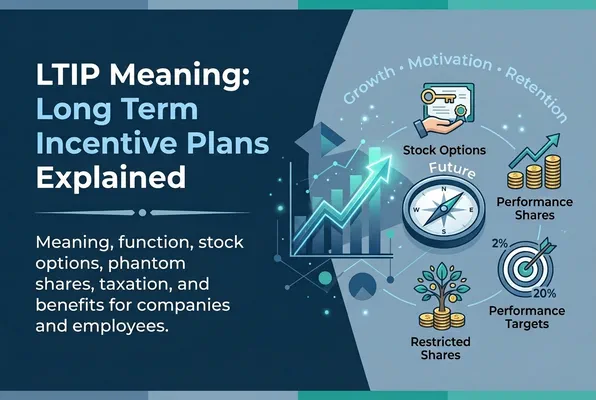

Long-term incentive plans are among the most powerful tools in modern executive and talent compensation — yet many professionals are still unclear on the exact LTIP meaning and how these plans actually function in practice. Whether you’re an HR leader designing a new compensation strategy, a finance professional modeling equity plans, or an employee who’s just received an LTIP grant, this guide will walk you through everything you need to know.
What Does LTIP Mean?
LTIP stands for Long-Term Incentive Plan. It is a formal compensation structure used by organizations to incentivize and retain employees — particularly executives and key talent — by tying a portion of their remuneration to the company’s performance over an extended period, typically three to five years.
Unlike a base salary or annual cash bonus, an LTIP defers a significant portion of compensation into the future. This deferral is intentional: it aligns employee behavior with the long-term interests of the business and its shareholders, discouraging short-termism and rewarding sustained value creation.
The Core Purpose of an LTIP
The fundamental goal of any LTIP is threefold:
- Retention — Keeping high-performing employees engaged over a multi-year horizon through a vesting schedule that rewards loyalty.
- Alignment — Connecting individual performance and decision-making to the long-term strategic outcomes of the organization.
- Motivation — Providing meaningful upside potential that goes beyond what a fixed salary or short-term bonus can offer.
When designed well, an LTIP transforms key employees into genuine stakeholders in the company’s success — people who think and act like owners because they effectively are.
How Do LTIPs Work?
Understanding the LTIP meaning requires looking at the mechanics of how these plans operate in practice.
The Grant
An LTIP cycle begins with a grant — the formal award of a specified number of equity units, shares, options, or a defined cash amount. The grant is typically made at the start of a performance period and is based on factors such as:
- The employee’s seniority and role
- A target percentage of base salary
- The company’s compensation philosophy and benchmarking data
The Performance Period
After the grant, the employee enters the performance period, which usually spans three years. During this time, the company and/or the employee is measured against a set of pre-defined performance conditions or metrics.
Vesting
At the end of the performance period (or on a rolling schedule for time-based plans), awards vest — meaning they become the employee’s to keep. Unvested awards are typically forfeited if the employee leaves voluntarily before the vesting date.
Vesting structures include:
- Cliff vesting: 100% of the award vests on a single date after the performance period.
- Graded vesting: Awards vest in tranches over time (e.g., 25% per year over four years).
- Performance-based vesting: The proportion that vests depends entirely on whether performance conditions are met.
Payout
Once awards vest, they are delivered to the participant — either as shares, cash equivalent, or a combination. The value at payout often differs significantly from the grant date value, reflecting changes in share price and whether performance targets were achieved.
Types of LTIP Awards
One of the most important dimensions of LTIP meaning is recognizing that “LTIP” is not a single instrument but an umbrella term covering several distinct award types. Each carries different financial, tax, and motivational characteristics.
Restricted Stock Units (RSUs)
RSUs are among the most widely used LTIP vehicles. They represent a promise to deliver company shares at a future date, subject to vesting conditions. RSUs are straightforward to communicate to employees and have a tangible, visible value tied directly to share price.
Key characteristics: - No upfront cost to the employee - Value always positive (unlike stock options, which can be “underwater”) - Taxed as ordinary income upon vesting in most jurisdictions
Performance Share Plans (PSPs)
Performance Share Plans — sometimes called Performance Share Units (PSUs) — deliver shares based on the achievement of specific corporate performance targets. The number of shares delivered varies (often from 0% to 200% of the target award) based on how performance compares to predefined metrics.
Common performance metrics include: - Total Shareholder Return (TSR), often measured relative to a peer group - Earnings Per Share (EPS) growth - Return on Capital Employed (ROCE) - Revenue or EBITDA growth - ESG-linked targets (increasingly common)
PSPs are popular with institutional investors and governance bodies because they tie executive reward directly to measurable outcomes.
Stock Options
Stock options give the holder the right — but not the obligation — to purchase company shares at a predetermined price (the “exercise price” or “strike price”) after a vesting period. If the share price rises above the exercise price, the option is “in the money” and has real value.
Types of stock options: - Non-Qualified Stock Options (NSOs/NQSOs): Taxed as ordinary income upon exercise. - Incentive Stock Options (ISOs): Available to US employees; may qualify for preferential capital gains tax treatment if certain conditions are met.
Stock options are particularly prevalent in startups and growth-stage companies where cash is constrained but equity upside is significant.
Share Appreciation Rights (SARs)
SARs are similar to stock options but instead of purchasing shares, the employee receives the increase in share value over a set period — either in cash or equity. SARs eliminate the need for employees to finance a share purchase, making them accessible even when share prices are high.
Phantom Shares / Cash-Settled Plans
For private companies or those that prefer not to dilute equity, phantom share plans offer a cash payout equivalent to the value of a specified number of shares. Participants enjoy the economic benefit of share price appreciation without actual share ownership.
These plans are especially useful for: - Private or closely held companies - Subsidiaries of listed parents - Companies where share liquidity is limited
Deferred Bonus Plans
Some organizations structure part of an annual bonus as a deferred award — delivered in shares or cash after a holding period of one to three years. While technically a form of short-term incentive (STI) deferral, deferred bonus plans often sit within the broader LTIP framework.
LTIP Performance Metrics: What Gets Measured
The credibility and effectiveness of an LTIP depend heavily on the choice of performance metrics. A poorly designed scorecard can undermine the plan’s purpose, creating misalignment or even perverse incentives.
Financial Metrics
The most common LTIP performance metrics are financial in nature:
| Metric | What It Measures |
|---|---|
| Relative TSR | Share price growth + dividends vs. a comparator group |
| EPS Growth | Growth in earnings per share over the period |
| ROCE | Efficiency of capital deployment |
| Revenue Growth | Top-line business expansion |
| Free Cash Flow | Cash generation after capex |
Non-Financial and ESG Metrics
Governance norms are rapidly evolving, and many companies now incorporate non-financial and ESG (Environmental, Social, and Governance) metrics into their LTIPs. These may include:
- Carbon emission reduction targets
- Employee engagement and wellbeing scores
- Diversity and inclusion goals
- Customer satisfaction indices
- Safety performance
Incorporating ESG metrics signals to investors, employees, and regulators that executive pay is connected to broader stakeholder value — not just shareholder returns.
Relative vs. Absolute Performance
Performance conditions can be set in absolute terms (e.g., achieve 10% EPS growth over three years) or relative terms (e.g., deliver TSR in the top quartile of a defined peer group). Relative measures have the advantage of adjusting for macroeconomic or sector-wide factors beyond management’s control, but they require careful construction of a fair and relevant comparator group.
LTIP Vesting Schedules Explained
The vesting schedule is one of the most employee-visible elements of any LTIP design, directly affecting how participants experience and value their awards.
Time-Based Vesting
In a pure time-based LTIP (common with RSUs), awards vest simply by virtue of the employee remaining in service for the required period. While straightforward, time-based vesting is less favored by institutional shareholders because it doesn’t tie reward to performance.
Performance-Based Vesting
Under performance-based vesting, the number of shares or amount of cash that ultimately vests is a function of performance outcomes. This is the dominant model for listed company executive LTIPs in the UK, US, and across Europe.
Hybrid Vesting
Many modern LTIPs use a hybrid approach: a portion of the award vests based on time (guaranteeing some retention value) while the remainder vests based on performance. This balances the retention and alignment objectives of the plan.
Holding Periods
In addition to the vesting schedule, many plans — particularly for senior executives — incorporate a post-vesting holding period during which the employee must retain net shares for a further period (typically one to two years). Holding periods are strongly encouraged by shareholder advisory bodies such as ISS and Glass Lewis.
Tax Treatment of LTIPs
Tax implications are a critical dimension of LTIP meaning for both employers and participants. Tax rules vary by jurisdiction and award type, but here are the key principles.
RSUs
RSUs are typically taxed as ordinary income at the point of vesting, based on the market value of shares received. The employer is usually required to withhold income tax and social security contributions at that point.
Stock Options
The tax treatment of stock options depends on the type: - NSOs: Taxed as ordinary income at exercise on the spread (market price minus exercise price). - ISOs: No tax at exercise if certain conditions are met; capital gains rates may apply on subsequent sale. - EMI Options (UK): A tax-advantaged option scheme for qualifying companies, providing significant tax benefits for both employer and employee.
Performance Shares
Performance shares generally trigger a tax charge at vesting when shares are received, based on the market value at that date. Any subsequent gain from holding the shares may be subject to capital gains tax.
Employer Considerations
Employers may be entitled to a corporate tax deduction on LTIP costs (the deduction is typically aligned to the employee’s taxable event). National Insurance Contributions (UK) or payroll taxes (US) are also due at certain trigger points depending on the award structure.
Note: Tax rules are complex and jurisdiction-specific. Always seek professional tax advice when designing or participating in an LTIP.
LTIP vs. Other Compensation Elements
To fully understand LTIP meaning, it helps to place it in the context of the total reward framework.
LTIP vs. Annual Bonus (STI)
| Feature | Annual Bonus (STI) | LTIP |
|---|---|---|
| Time horizon | 1 year | 3–5 years |
| Performance period | Current fiscal year | Multi-year |
| Form of payment | Usually cash | Equity, cash, or both |
| Primary purpose | Reward short-term results | Align with long-term value |
| Vesting | Immediate | Deferred over multiple years |
LTIP vs. Base Salary
Base salary provides financial certainty and is fixed regardless of performance. LTIP, by contrast, introduces variable, at-risk compensation that may be worth zero if performance targets are missed. Together, they form a balanced total compensation package.
LTIP vs. Profit-Sharing
Profit-sharing plans distribute a percentage of annual profits to employees and are typically short-term in nature. LTIPs are explicitly long-term instruments designed to drive sustained value creation rather than reward any single year’s profitability.
Designing an Effective LTIP
For HR leaders and compensation professionals, designing an LTIP that actually achieves its objectives requires careful planning across several dimensions.
Step 1: Define the Strategic Objectives
Before selecting award types or performance metrics, clarify what the plan is trying to achieve. Is the primary goal retention of a small group of key executives? Driving a specific transformation (e.g., digital, ESG)? Broad-based equity participation? Different goals point to different designs.
Step 2: Determine Eligibility and Grant Levels
Who will participate, and how much will they receive? Consider: - Market benchmarking data to set competitive grant sizes - Internal pay equity considerations - The dilutive impact of equity awards on existing shareholders
Step 3: Choose the Right Award Type
Match the award instrument to the company’s circumstances: - Listed companies often use PSPs or RSUs. - Private companies may prefer phantom shares, options, or growth shares. - Startups frequently rely heavily on stock options.
Step 4: Set Meaningful Performance Conditions
Performance targets should be: - Stretching but achievable - Aligned with the company’s strategic plan - Transparent and understandable to participants - Robust enough to withstand scrutiny from shareholders and governance advisers
Step 5: Communicate Clearly and Regularly
An LTIP only motivates if participants understand it. Invest in clear award letters, participant dashboards, regular performance updates, and financial education. Tools like Incentrium can help simplify LTIP communication and administration, giving participants real-time visibility into the value of their awards.
Step 6: Review and Evolve
The best LTIPs are not static. Review plan design regularly — typically every three to five years — to ensure it remains aligned with strategy, market practice, and shareholder expectations.
Common LTIP Challenges and How to Overcome Them
Even well-designed LTIPs can encounter problems. Here are the most common challenges and practical solutions.
Challenge 1: Participants Don’t Value the Award
If employees don’t understand or trust the plan, it loses its motivational power. Solution: Invest in education, digital tools, and total compensation statements that show the tangible value of awards.
Challenge 2: Performance Metrics Are Misaligned
Targets that are too easy provide windfall gains; targets that are too hard lead to disengagement. Solution: Use robust external benchmarking and stress-test targets against a range of scenarios before finalizing.
Challenge 3: Retention Cliff Effect
Employees may leave immediately after awards vest. Solution: Stagger vesting dates, introduce holding periods, and ensure the plan always has unvested awards in flight to maintain retention pull.
Challenge 4: Equity Dilution Concerns
Large equity grants can dilute existing shareholders. Solution: Monitor dilution carefully, use share buybacks to offset dilution, or consider cash-settled alternatives.
Challenge 5: Share Price Volatility
Awards linked solely to share price can be dramatically affected by market conditions unrelated to management performance. Solution: Incorporate relative performance measures (e.g., relative TSR) that adjust for market movements.
LTIP Governance and Shareholder Expectations
For listed companies, LTIP design does not happen in isolation — it must satisfy institutional shareholders and proxy advisers.
Key Governance Principles
Major institutional investors and governance bodies (including ISS, Glass Lewis, and the Investment Association in the UK) generally expect:
- Performance conditions that are stretching and clearly disclosed
- Meaningful deferral with post-vesting holding periods for executives
- Malus and clawback provisions allowing awards to be reduced or recovered in cases of misconduct or financial restatement
- Dilution limits (typically 10% of issued share capital over 10 years for all share plans; 5% for discretionary executive plans)
- No retesting of performance conditions
Malus and Clawback
Increasingly standard, malus allows the company to reduce or cancel unvested awards in defined circumstances. Clawback goes further — allowing the company to recover awards already paid out, typically for up to two years post-vesting. These provisions are now expected as standard by most institutional investors.
The Future of LTIPs
The LTIP landscape is evolving rapidly in response to changing workforce dynamics, investor expectations, and societal priorities.
ESG Integration
ESG performance conditions are becoming mainstream, not just in executive pay but increasingly in broader employee LTIPs. Expect to see more plans incorporating climate targets, social metrics, and governance indicators.
Broader Employee Participation
There is growing momentum — particularly in the tech and scale-up sectors — toward extending meaningful equity participation beyond the C-suite. All-employee LTIPs and equity-like structures for wider workforces are gaining traction.
Real-Time Transparency
Digital platforms are transforming how employees interact with their LTIPs. Real-time dashboards, scenario modelers, and mobile-first communication tools are becoming the norm, dramatically improving engagement with and perceived value of long-term incentive awards.
Simplified Structures
Complexity has historically been one of the biggest barriers to LTIP effectiveness. The trend is toward simpler, more transparent plan designs that employees can genuinely understand and value.
Long Term Incentive
A long term incentive (LTI) is part of a modern compensation plan designed to reward employees for achieving long-term goals and contributing to business growth. It is often linked to company stock or other equity compensation elements and is used in many public companies.
Types of LTIPs
There are different types of long-term incentive plans (lti plans), such as stock-based awards or deferred cash programs. These lti structures are designed to support long-term performance and align employees with the company’s long-term success.
Motivation and Retention
LTIPs are mainly used to motivate employees, attract top talent, and improve employee retention. By linking rewards to financial performance and the company’s stock price, employees are encouraged to stay with the company and contribute to its success over time.
Summary
The LTIP meaning encompasses far more than a simple acronym. Long-Term Incentive Plans are sophisticated, multi-dimensional compensation instruments that — when designed and communicated well — can be transformative for organizational performance, talent retention, and shareholder value creation.
Whether you’re building a new plan from scratch, reviewing an existing structure, or trying to help employees engage more meaningfully with their awards, the principles remain consistent: align reward with strategy, set meaningful performance conditions, vest over appropriate timeframes, and communicate with clarity and regularity.
Platforms like Incentrium are purpose-built to help companies manage and communicate LTIPs effectively — bridging the gap between complex plan mechanics and the employee experience that determines whether an LTIP truly delivers on its promise.
FAQ
What is the basic LTIP meaning in compensation?
Who is typically eligible for an LTIP?
How is LTIP different from a bonus?
Are LTIP awards taxable?
Written by
Dominik KonoldCEO & Founder
Dominik Konold is the CEO and founder of Finidy GmbH, specializing in share-based compensation and treasury accounting. With a background in audit and investment banking, he is a certified Professional Risk Manager (PRMIA) and lectures for the Association of Public Banks and the Academy of International Accounting.
Related Posts
Dry Income: Meaning, Tax Impact & Management Tips
This article explains what dry income is, why it occurs, how it affects business owners and investors, and which tax strategies can help manage tax liabilities and maintain financial stability.
Accelerated Vesting: How to Accelerate Your Vesting Schedule for Stock Options & Restricted Stock
This guide explains accelerated vesting, including single- and double-trigger acceleration, vesting schedules, equity grants, and what happens to employee equity during major corporate events.
Good Leaver: Definition, Clauses & Equity Rules Explained
This article explains what a good leaver is and how good leaver clauses and provisions affect employees, founders, and shareholders when they leave a company.
Ready to simplify your equity programs?
See how Incentrium helps you manage share-based compensation with ease. Book a demo to learn more.
Book a Demo