Preferred Equity Explained: How Equity and Preferred Equity Work in Private Markets


Preferred equity is one of the most versatile and widely used instruments in private markets, real estate, and venture capital. Whether you are a fund manager structuring a complex deal, an institutional investor building a diversified portfolio, or a founder raising capital, understanding how preferred equity works is essential for making sound financial decisions.
This guide walks through every key dimension of preferred equity, from how it is structured and where it sits in the capital stack, to how returns are calculated, how it compares with other instruments, and how platforms like Incentrium help investment professionals manage preferred equity structures with clarity and precision.
What Is Preferred Equity?
Preferred equity is a class of ownership interest in a company or investment vehicle that grants holders certain priority rights over common equity holders. These rights typically include:
- Priority distributions: Preferred equity investors receive returns before common equity holders.
- Preferred return: A minimum rate of return (the “pref”) that accrues to preferred investors before profits are shared.
- Liquidation preference: In the event of a sale, wind-down, or liquidation, preferred equity holders are repaid first.
- Defined terms: Preferred equity often carries a defined holding period, redemption rights, or conversion features.
Preferred equity occupies a unique position in finance: it behaves somewhat like debt (priority, defined returns) but remains an equity instrument, without the same legal enforcement rights as a senior lender.
Why Preferred Equity Exists
Capital structures exist to allocate risk and return efficiently among different investors with different risk tolerances. Not every investor is willing to take the full volatility of common equity, but many also want returns that exceed what senior debt provides. Preferred equity fills this gap, offering:
- Higher expected returns than debt
- Lower risk than common equity
- Clearly defined priority in the distribution waterfall
This makes preferred equity attractive to institutional investors, family offices, and high-net-worth individuals seeking risk-adjusted returns in private markets.
The Capital Stack: Where Preferred Equity Sits
To understand preferred equity, you need to understand the capital stack, the layered structure of capital in any investment deal. From most senior (lowest risk, lowest return) to most junior (highest risk, highest return), a typical capital stack looks like this:
- Senior Debt – First mortgage or senior secured loan; paid first, lowest risk.
- Mezzanine Debt – Subordinated debt; higher return than senior debt, often with equity-like features such as warrants.
- Preferred Equity – Priority equity; receives returns and repayment before common equity.
- Common Equity – Last in line; highest risk but participates fully in upside.
Preferred equity holders are subordinate to all debt holders, meaning senior lenders and mezzanine lenders are repaid before preferred equity investors receive anything. However, preferred equity holders are senior to common equity (including the sponsor’s promoted interest), which provides meaningful downside protection.
Gap Financing and the Role of Preferred Equity
In real estate transactions especially, preferred equity is commonly used as “gap financing.” When a senior lender will only finance 60–65% of a project’s capital needs, and the sponsor contributes 10–15% as common equity, a gap remains. Preferred equity investors fill this gap, often providing 10–25% of total project capitalization, earning a preferred return for taking on more risk than the lender while maintaining priority over the sponsor’s common equity.
Key Features of Preferred Equity Structures
Preferred Return
The preferred return, often referred to simply as the “pref”, is the annual rate of return that preferred equity investors must receive before any distributions flow to common equity holders. Common preferred return rates in private real estate funds range from 6% to 10% annually, while venture capital structures and private equity funds may use different benchmarks.
Cumulative vs. Non-Cumulative Preferred Return
One of the most important distinctions in preferred equity terms is whether the preferred return is cumulative or non-cumulative:
- Cumulative: If a period’s preferred return is not paid, it accrues and compounds, and must be paid in full before common equity holders receive anything.
- Non-cumulative: Unpaid preferred returns do not accrue. If cash flow is insufficient in a given period, that return is simply lost for preferred holders.
Most institutional preferred equity arrangements are cumulative, providing stronger downside protection.
Liquidation Preference
The liquidation preference defines how proceeds are distributed in the event of a sale or wind-down. There are several common variations:
- 1x Non-Participating: Preferred holders receive their invested capital back (times a stated multiple), and common equity holders take the rest.
- Participating: Preferred holders receive their capital back and then participate alongside common equity holders in remaining proceeds, often called “double-dipping.”
- Capped Participating: Preferred holders participate in remaining proceeds but only up to a defined cap, providing a middle ground.
In venture capital, liquidation preferences have a direct impact on founder and employee equity value, making them a critical negotiating point during fundraising rounds.
Conversion Rights
Many preferred equity instruments include the right to convert to common equity under certain conditions. This is especially common in venture capital:
- Mandatory conversion: Preferred equity automatically converts to common equity upon a qualifying IPO or financing event.
- Optional conversion: Preferred equity holders can elect to convert at their discretion, typically when the common equity upside exceeds the liquidation preference value.
Conversion rights give preferred equity a degree of upside participation that pure debt instruments do not offer.
Redemption Rights
Preferred equity structures often include redemption provisions, which allow either the investor or the issuer to “buy out” the preferred position under defined conditions. These may include:
- Mandatory redemption: The issuer must redeem preferred equity after a defined holding period (e.g., 3–5 years).
- Optional redemption: The preferred investor or the issuer has the right, but not the obligation, to trigger redemption.
Redemption rights are particularly common in real estate preferred equity, where the preferred position is expected to be repaid upon project completion, refinancing, or sale.
Anti-Dilution Protections
In startup and venture capital contexts, preferred equity holders often receive anti-dilution protection. This prevents the value of their equity stake from being eroded by future financing rounds issued at a lower valuation (a “down round”). The two primary mechanisms are:
- Full ratchet: The conversion price adjusts to the new, lower price, most protective for investors, most punitive for founders.
- Weighted average: A more moderate adjustment that accounts for the size of the new issuance relative to existing shares.
Types of Preferred Equity
Not all preferred equity is the same. Different deal structures, asset classes, and investor objectives lead to meaningfully different preferred equity configurations.
Straight Preferred Equity
This is the most basic form: investors receive a fixed preferred return, have liquidation priority over common equity, and do not participate in upside beyond their stated return. This structure is most common in real estate and private credit-adjacent strategies where income and capital preservation are the primary objectives.
Participating Preferred Equity
Participating preferred structures allow preferred equity holders to receive their priority return and share in remaining profits alongside common equity holders. This increases the total return potential for preferred investors but reduces the upside available to common equity holders and sponsors.
Convertible Preferred Equity
Widely used in venture capital, convertible preferred equity can convert to common equity under specified conditions. This allows early-stage investors to participate in the full upside of a successful company while retaining downside protection through the liquidation preference and preferred return if the company underperforms.
Redeemable Preferred Equity
In private equity and real estate, redeemable preferred equity includes explicit terms for repayment at a future date. It is structured to act almost like a high-yield loan from the investor’s perspective, but it is legally classified as equity, which has implications for leverage ratios, accounting treatment, and tax structuring.
Preferred Equity vs. Mezzanine Debt
Preferred equity and mezzanine debt are frequently compared because they occupy similar risk-return positions in the capital stack. However, they are meaningfully different instruments.
| Feature | Preferred Equity | Mezzanine Debt |
|---|---|---|
| Legal nature | Equity | Debt |
| Priority | Below all debt | Above all equity |
| Default remedies | Limited | Significant (foreclosure, acceleration) |
| Return mechanism | Preferred return / distributions | Interest payments |
| Tax treatment | Varies | Interest often tax-deductible |
| Upside participation | Possible (participating preferred) | Possible (through warrants) |
Mezzanine lenders have stronger legal enforcement rights than preferred equity holders. If a borrower defaults on a mezzanine loan, the lender can foreclose on the equity pledged as collateral. Preferred equity holders, by contrast, typically rely on operating agreements and equity-level remedies, which can be more difficult to enforce quickly.
This is why preferred equity typically commands a higher return than mezzanine debt, investors are compensated for this additional risk and reduced legal protection.
Preferred Equity vs. Common Equity
When comparing preferred equity to common equity, the key distinction is priority. Preferred shareholders generally rank ahead of common shareholders and ahead of common equity when it comes to distributions and repayment. While common shareholders hold common stock and may benefit from common stock dividends and long-term appreciation, preferred shareholders typically receive preferred dividends and may receive dividend payments before common shareholders. These preferred securities can therefore offer a different balance of risk and reward than traditional equity ownership.
The Distribution Waterfall and Preferred Equity
The distribution waterfall is the mechanism that determines how cash flows and profits are allocated among investors in a fund or deal. Understanding how preferred equity fits into the waterfall is critical for modeling returns accurately.
A typical waterfall for a real estate deal with preferred equity might look like this:
- Return of capital: All investors receive their contributed capital back.
- Preferred return to preferred equity investors: Preferred equity holders receive their accrued preferred return (e.g., 8% cumulative).
- Return of common equity capital: Common equity holders (sponsor + co-investors) receive their capital back.
- Common equity preferred return (if applicable): A stated minimum return flows to common equity before the promote kicks in.
- Promote / carried interest: The sponsor receives a disproportionate share of remaining profits (the “carry”) as a performance incentive.
- Residual profits: Distributed between sponsor and common equity investors per agreed splits.
Preferred equity holders receive priority in steps 1 and 2, which is the core of their downside protection. However, once their preferred return is satisfied, they typically do not participate further in the waterfall unless the structure is participating preferred.
Modeling the Waterfall
Accurately modeling distribution waterfalls is one of the most technically demanding aspects of fund management. Small differences in waterfall mechanics, whether the preferred return is calculated on a simple or compound basis, how catch-up provisions work, whether returns are calculated deal-by-deal or at the fund level, can create significant differences in actual investor returns.
Tools like Incentrium are purpose-built for this complexity, enabling fund managers to model, automate, and communicate waterfall calculations and preferred equity structures to LPs with transparency and precision.
Preferred Equity in Real Estate
Real estate is one of the most common contexts for preferred equity investing. In a competitive lending environment, real estate sponsors frequently turn to preferred equity to optimize their capital structure.
How Real Estate Preferred Equity Works
A typical real estate preferred equity arrangement involves:
- The sponsor identifies an acquisition or development opportunity requiring $20M in total capitalization.
- A senior lender provides $13M (65% LTV) as a first mortgage.
- Preferred equity investors provide $4M (20% of total) at a 9% preferred return.
- The sponsor contributes $3M (15%) as common equity.
The preferred equity investors receive 9% annually on their $4M, accruing cumulative if not paid from cash flow. Upon sale or refinancing, they are repaid their $4M plus any accrued return before the sponsor receives any profit. This structure gives the sponsor higher leverage without taking on additional debt (which might breach lender covenants), while giving preferred equity investors a priority position with defined returns.
Preferred Equity in Commercial Real Estate
In the real estate market, preferred equity real estate structures can provide an alternative source of capital for a commercial real estate project. In commercial real estate deals, pref equity sits between debt and common equity in the capital structure. Unlike common equity, preferred investors typically have contractual priority and may receive dividend payments before common shareholders. For real estate investors, this can make investing in preferred equity attractive when seeking defined income and a more protected position relative to common equity.
Real Estate Preferred Equity vs. Joint Ventures
In real estate joint ventures (JVs), a capital partner and an operating partner (sponsor) co-invest in a deal. The preferred equity structure is often embedded within the JV agreement, with the capital partner holding preferred equity and the sponsor holding common equity (plus their promote interest). The JV operating agreement governs all distribution mechanics, redemption rights, and governance provisions.
Risk Factors in Real Estate Preferred Equity
While preferred equity offers priority over common equity, it is important to recognize its risks:
- No lender foreclosure rights: Unlike a mezzanine lender, a preferred equity investor cannot foreclose on real property, only on the equity of the entity owning the property.
- Illiquidity: Real estate preferred equity positions are typically illiquid until the deal is sold or refinanced.
- Subordinate to senior debt: If a project fails and proceeds are insufficient to repay the senior lender, preferred equity investors may lose their entire investment.
- Sponsor dependency: Returns depend on the sponsor’s ability to execute the business plan.
Benefits of Preferred Equity for Real Estate Investors
The benefits of preferred equity are particularly relevant when investing in preferred positions within commercial real estate deals. Compared with common equity, preferred positions can offer greater payment priority and a clearer income profile while still maintaining equity ownership rather than functioning as traditional debt. For investors evaluating preferred equity real estate opportunities, the ability to receive dividend payments before common shareholders can support a more predictable balance of risk and reward. This makes investing in preferred equity a potential strategy for investors seeking priority over common stock while participating in the broader real estate market.
Preferred Equity in Venture Capital and Startups
In the startup ecosystem, nearly all institutional venture capital is invested as preferred equity. When a VC firm invests in a Series A, B, or C round, they almost always receive preferred shares rather than common shares.
Why VCs Use Preferred Equity
Preferred equity gives venture investors crucial protections in a highly risky asset class:
- Liquidation preference protects capital in an acquisition at a lower valuation than the last round.
- Anti-dilution provisions protect investors from equity dilution in down rounds.
- Board seats and governance rights often accompany preferred equity investments.
- Conversion to common equity allows full upside participation in a successful IPO.
Impact on Founders and Employees
The terms of preferred equity directly impact the value of founder shares and employee stock options. Heavily investor-friendly preferred equity terms (participating preferred, full ratchet anti-dilution, high liquidation multiples) can significantly reduce the value of common shares in exit scenarios where the purchase price is lower than investor expectations.
This is why founders increasingly work with legal advisors to negotiate balanced preferred equity terms, strong enough to attract institutional capital but not so punitive as to undermine founder and employee incentives.
Tax and Accounting Considerations
Tax Treatment
The tax treatment of preferred equity depends heavily on jurisdiction and structure:
- In the US: Preferred equity in a partnership or LLC is generally treated as an equity interest. Distributions may be taxable as ordinary income or capital gains depending on the character of underlying income.
- In a corporation: Qualified dividends from preferred stock may receive favorable tax treatment for eligible shareholders.
- In real estate: Preferred equity structures through pass-through entities (LLCs, LPs) may allow investors to benefit from depreciation deductions, reducing taxable income.
It is essential to work with qualified tax counsel to structure preferred equity arrangements appropriately, as the IRS and other tax authorities scrutinize instruments that behave like debt but are classified as equity.
Accounting Treatment
Under US GAAP and IFRS, whether preferred equity is classified as a liability or equity on the balance sheet depends on whether redemption is mandatory or discretionary:
- Mandatorily redeemable preferred equity is generally classified as a liability.
- Optionally redeemable preferred equity is generally classified as equity (or mezzanine equity if redemption is not solely within the issuer’s control).
For fund managers and CFOs, the accounting classification of preferred equity affects leverage ratios, reported equity, and financial covenant compliance, making this an important structuring consideration.
Managing Preferred Equity Structures with Technology
As preferred equity structures have grown more complex, multi-tier waterfalls, multiple preferred classes, cascading conversion triggers, tiered preferred returns, the administrative burden of managing these investments has grown substantially. Manual spreadsheets introduce errors, reduce transparency, and slow investor reporting.
Modern fund administration platforms address these challenges directly. Incentrium provides investment managers with tools to:
- Model complex distribution waterfalls including multiple tiers of preferred equity with different return hurdles.
- Automate preferred return accruals on a daily, monthly, or quarterly basis.
- Generate LP-facing reports that clearly communicate preferred equity positions, accrued returns, and distribution histories.
- Scenario modeling to project outcomes under different exit assumptions and timelines.
- Audit trails for all waterfall calculations, supporting investor transparency and regulatory compliance.
As institutional investors increasingly expect transparency and digital reporting from fund managers, the ability to accurately and efficiently manage preferred equity structures is a competitive advantage.
Structuring Preferred Equity
When structuring a preferred equity investment, sponsors and investors need to define the relationship between preferred and common interests, including distribution priorities, redemption provisions and return expectations. Preferred shareholders may receive equity dividends or preferred returns ahead of common, while common investors retain greater exposure to the residual upside of the real property. The structure therefore needs to balance the interests of both classes within the broader debt and equity capital stack.
Best Practices for Structuring Preferred Equity
Whether you are an investor negotiating terms or a sponsor seeking capital, the following best practices apply to preferred equity structuring:
For Investors
- Insist on cumulative preferred returns to ensure missed payments accrue and are fully repaid.
- Negotiate clear redemption rights to ensure there is a defined path to liquidity.
- Carefully review enforcement remedies and understand what recourse you have in default scenarios.
- Assess the senior debt terms to understand your actual risk exposure in a downside scenario.
- Use participatory features selectively to balance income protection with upside participation.
For Sponsors and Issuers
- Maintain alignment of interests by ensuring preferred return hurdles are achievable under realistic projections.
- Carefully document waterfall mechanics in the operating agreement or fund documents to avoid disputes.
- Understand the impact on your promote before accepting highly dilutive preferred equity terms.
- Model multiple exit scenarios to assess the impact of preferred equity terms on your net proceeds.
- Work with experienced counsel on anti-dilution provisions and conversion mechanics, particularly in multi-round financing contexts.
Conclusion
Preferred equity is a powerful and flexible tool in modern capital markets, one that bridges the gap between the relative safety of senior debt and the full risk-return profile of common equity. Whether deployed in real estate capital stacks, private equity funds, or venture capital financing rounds, preferred equity structures enable more efficient capital allocation by matching investor risk tolerance with appropriate priority rights and return expectations.
Understanding the nuances of preferred equity, from cumulative preferred returns and liquidation preferences to anti-dilution protections and distribution waterfalls, is essential for anyone operating in private markets. As deal complexity increases, so too does the importance of having the right technology and processes to manage these structures accurately.
Incentrium is built for investment professionals who need to manage, model, and communicate complex equity structures with precision. Whether you are running a real estate fund with tiered preferred equity classes or managing a VC portfolio with multiple preferred share series, Incentrium provides the operational infrastructure to do it confidently.
FAQ
What is the difference between preferred equity and common equity?
Is preferred equity the same as debt?
What is a preferred return in preferred equity structures?
How is preferred equity used in real estate investing?
Written by
Dominik KonoldCEO & Founder
Dominik Konold is the CEO and founder of Finidy GmbH, specializing in share-based compensation and treasury accounting. With a background in audit and investment banking, he is a certified Professional Risk Manager (PRMIA) and lectures for the Association of Public Banks and the Academy of International Accounting.
Related Posts
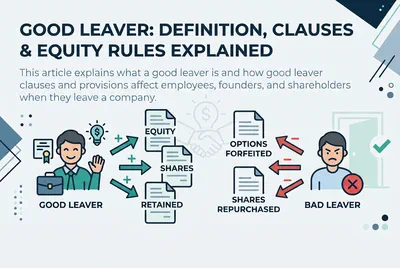
Good Leaver: Definition, Clauses & Equity Rules Explained
This article explains what a good leaver is and how good leaver clauses and provisions affect employees, founders, and shareholders when they leave a company.

Cap Table Explained: The Ultimate Cap Table Guide for Founders
A cap table shows a startup’s ownership structure, including founders, employees, and investors, and explains how shares change through funding, dilution, and exits.
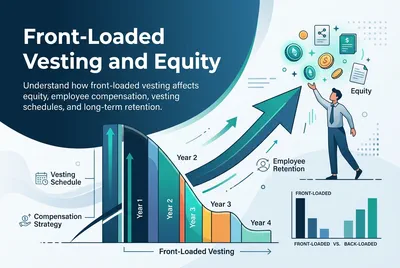
Front-Loaded Vesting and Equity
Understand how front-loaded vesting affects equity, employee compensation, vesting schedules, and long-term retention.
Ready to simplify your equity programs?
See how Incentrium helps you manage share-based compensation with ease. Book a demo to learn more.
Book a Demo