Sweat Equity Ventures: Complete Guide to Earning Ownership
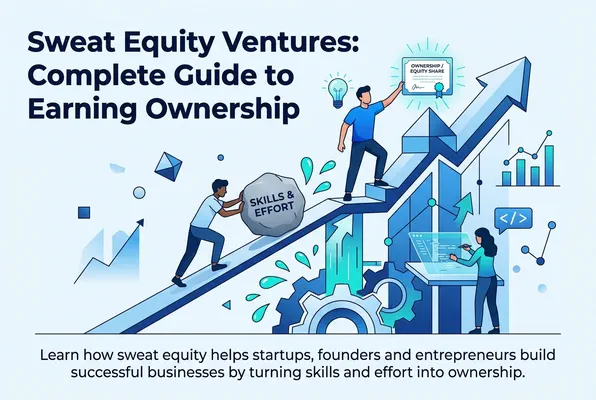

Sweat equity is one of the most powerful, and most misunderstood, concepts in business and real estate. Whether you are a co-founder building a startup from zero, a key early employee joining a pre-revenue company, or a homeowner renovating a property with your own hands, sweat equity is the mechanism that converts effort into ownership.
Done right, sweat equity aligns incentives, preserves cash, and creates lasting wealth. Done wrong, it generates disputes, tax surprises, and demotivated teams. This guide breaks down everything you need to know: what sweat equity is, how it works across different contexts, how to value and structure it fairly, and how to avoid the most common pitfalls.
What Is Sweat Equity?
Sweat equity is the non-monetary contribution—time, skills, labor, and expertise—that a person exchanges for an ownership interest in a business or asset. The term comes from the idea of earning equity through the “sweat of your brow” rather than through a cash investment.
In the startup world, sweat equity typically refers to co-founder shares or equity grants given to early employees and advisors who accept below-market compensation in exchange for a stake in the company’s future success. In real estate, it describes the value a homeowner adds to a property by performing renovation work themselves instead of hiring contractors.
The Origins of Sweat Equity
Although sweat equity is widely associated with startups today, the concept first became well known through community housing initiatives. Clarence Jordan, the founder of Koinonia Farm, inspired a model in which partner families could build their own homes by contributing time and effort instead of relying solely on money. Participants often volunteer on the build site, complete homeowner classes, and support projects through Habitat ReStore. Their work represents an exchange for ownership, making homeownership more accessible and helping to lower the cost of homeownership for families with limited resources.
Core Components of Sweat Equity
- Non-cash contribution: The individual contributes labor, intellectual property, or specialized skills instead of capital.
- Ownership stake: In return, they receive shares, membership units, or a percentage of equity in the business or asset.
- Deferred value: The equity’s worth is realized in the future, upon sale, IPO, dividend, or appreciation, not immediately.
- Aligned incentives: Because the contributor becomes an owner, their interests are directly aligned with the success of the venture.
How Sweat Equity Creates Long-Term Value
Sweat equity is based on the principle that personal contributions can generate value even without significant financial capital. Whether through physical labor or mental effort, individuals contribute sweat equity during the creation or building process of an asset or business. The actual sweat equity created depends on the measurable impact of those contributions rather than the number of hours invested. In many situations, consistent effort leads to an increase in value, demonstrating that ownership can be earned through meaningful participation instead of cash alone.
Sweat Equity in Startups and Early-Stage Companies
Startups are the most common context in which sweat equity arrangements are formalized. When a company has limited cash but enormous potential, sweat equity bridges the gap between what the business can pay and what talented people are worth.
Why Sweat Equity Matters in Early-Stage Startups
For an entrepreneur in the early stages of a project or enterprise, access to funding is often limited. Instead of relying entirely on financial capital, many startups use sweat equity to attract talented people when they have little capital available. Rather than offering high salaries, founders may grant sweat equity shares or create sweat equity ventures that allow contributors to receive compensation through future ownership. This approach helps incentivize employees and advisors while building equity for everyone involved. In some organizations, contributors can even earn sweat equity credit based on predefined milestones or performance. According to Investopedia and many industry experts, sweat equity remains an important concept in personal finance and entrepreneurial finance because it allows innovative businesses to grow before significant outside investment becomes available.
Founders and Co-Founders
When two or more people start a business together, the initial equity split is fundamentally a sweat equity negotiation. Each founder contributes different skills—technical, commercial, operational—and the ownership split should reflect the expected long-term value of those contributions.
A common mistake is splitting equity equally without thinking it through. Equal splits feel fair at the start, but they rarely reflect actual contributions over time. A better approach is to assess:
- The uniqueness and replaceability of each founder’s skills
- The time commitment each founder can realistically make
- Who is contributing intellectual property, customer relationships, or other assets
- Who bears the most financial risk during the early phase
Early Employees and Key Hires
Beyond co-founders, startups frequently offer sweat equity to early employees who accept salaries below market rate. This is often structured through employee stock option plans (ESOPs) or restricted stock units (RSUs).
These instruments allow employees to earn equity over time, typically through a vesting schedule. The most common structure is a four-year vesting schedule with a one-year cliff, meaning:
- No equity vests during the first year (the “cliff”)
- At the 12-month mark, 25% of the total grant vests at once
- The remaining 75% vests monthly or quarterly over the following three years
This structure protects the company against early departures while giving employees a meaningful incentive to stay.
Advisors and Consultants
Advisors who provide strategic guidance, introductions, or specialized expertise can also receive sweat equity. Typical advisor equity ranges from 0.1% to 1% depending on the stage of the company, the advisor’s profile, and the depth of their involvement. Advisor grants usually have shorter vesting schedules of one to two years.
Sweat Equity in Real Estate
In real estate, sweat equity has a more literal meaning: you increase the value of a property by putting in physical work. A homeowner who renovates a kitchen, finishes a basement, or landscapes a yard is generating sweat equity by improving the asset’s market value without paying contractor rates.
How Real Estate Sweat Equity Works
The value created equals the difference between what the work cost you (primarily materials and your time) and what that work would have cost if you had hired professionals. If a bathroom renovation would cost $15,000 with a contractor but you complete it for $4,000 in materials, you have generated roughly $11,000 in sweat equity, assuming the market recognizes the full value of the improvement.
Habitat for Humanity and Community Programs
Sweat equity is also a formal requirement in some nonprofit homeownership programs. Habitat for Humanity, for example, requires future homeowners to contribute several hundred hours of labor, either on their own home or on other homes in the program, as part of the qualification process. This requirement reduces the cost of construction and gives homeowners a genuine stake in the community they are joining.
Real Estate Partnerships
In real estate investment partnerships, one partner might contribute capital while another contributes project management, construction oversight, or renovation labor. The sweat equity partner receives an equity share in the property that is proportional to the value of their contribution, typically negotiated up front and documented in a partnership agreement.
Sweat Equity in Homeownership Programs
Outside the startup ecosystem, sweat equity is commonly used in affordable housing initiatives. A new homeowner investing time in construction work on their home or completing approved home improvements can use sweat equity to increase a property’s worth over time. As the property’s value grows, the homeowner benefits from the resulting increase in value while reducing development costs. These programs demonstrate that ownership can be achieved through active participation as well as financial investment.
How to Value Sweat Equity
Valuing sweat equity is one of the most challenging aspects of these arrangements, because you are assigning a present value to future contributions whose quality and impact are inherently uncertain.
Common Valuation Methods
1. Replacement Cost Method What would it cost to hire someone of equivalent skill to perform the same work? If a senior software engineer commands $200,000 per year on the open market and a co-founder is contributing those skills, the annual “cost” of their sweat equity is $200,000. Over a three-year period, their total contribution would be valued at $600,000.
2. Percentage of Company Value Rather than calculating a dollar amount, the parties negotiate a percentage of the company that each contributor deserves relative to all other contributions (cash, IP, connections, and labor). This is inherently subjective but is often the most practical approach for early-stage startups where the company itself has no established valuation.
3. Milestone-Based Valuation Equity is granted as specific milestones are achieved—shipping a product, reaching revenue targets, or closing a funding round. This approach reduces speculative grants and ties equity directly to demonstrated value creation.
4. Vesting-Based Accrual Rather than valuing the equity upfront, parties agree on a vesting schedule that gradually converts labor into equity over time. This is the most common approach in startup equity compensation because it naturally accounts for uncertainty.
The Importance of Fair Market Value
For tax and legal purposes, the equity received through a sweat equity arrangement is often assessed against its fair market value (FMV) at the time of the grant or vesting. In the US, startups typically commission a 409A valuation, an independent appraisal of the company’s common stock value, to establish a defensible FMV that protects both the company and the equity recipient.
Structuring a Sweat Equity Agreement
A well-drafted sweat equity agreement is the foundation of any successful arrangement. Handshake deals and verbal agreements almost always lead to disputes when the stakes become high enough to matter.
Key Elements of a Sweat Equity Agreement
Equity Pool Definition Define the total equity available for sweat equity arrangements and how it relates to the overall cap table. This prevents over-dilution and ensures all stakeholders understand the ownership structure.
Contribution Description Clearly articulate what each party is contributing: specific roles, time commitments, deliverables, and performance expectations. Vague descriptions like “strategic guidance” invite conflict.
Vesting Schedule Specify the vesting timeline, cliff period, and acceleration provisions. Include what happens to unvested equity if the contributor leaves voluntarily, is terminated with cause, or is terminated without cause.
Valuation Methodology Document how the equity was valued at the time of the agreement and what methodology will be used for future grants.
Dilution Provisions Explain how the contributor’s equity will be treated in future funding rounds. Will they have pro-rata rights to participate? Will their stake be diluted alongside other holders?
Transfer Restrictions Equity in early-stage companies is almost always subject to transfer restrictions. Define what happens if a contributor wants to sell or transfer their shares.
Exit and Buyout Clauses Address what happens upon a company sale, merger, or dissolution. Include drag-along and tag-along rights where appropriate.
Dispute Resolution Specify how disputes will be resolved—mediation, arbitration, or litigation—and in which jurisdiction.
Tax Implications of Sweat Equity
Tax treatment of sweat equity is a complex area that varies significantly by jurisdiction, entity type, and the specific instrument used. Here is a high-level overview for US-based companies; always consult a qualified tax professional for advice specific to your situation.
Ordinary Income Tax
In general, equity received in exchange for services is treated as ordinary income by the IRS, taxable at the fair market value of the equity at the time it is received. This can create a significant tax liability at the moment of receipt, even if the recipient has not received any cash.
Restricted Stock and the 83(b) Election
When equity is subject to vesting (i.e., it can be forfeited), it is classified as restricted stock. Under default IRS rules, the recipient is taxed as shares vest, at the FMV at the time of vesting. However, recipients can file an 83(b) election within 30 days of receiving the grant, electing to pay tax immediately on the FMV at grant which, for an early-stage startup, is typically very low. Future appreciation is then taxed as capital gains rather than ordinary income, potentially at a much lower rate.
The 83(b) election is one of the most valuable tax planning tools available to founders and early employees, but it must be filed within 30 days of the grant date with no exceptions.
Incentive Stock Options (ISOs) and Non-Qualified Stock Options (NSOs)
Stock options are a common alternative to restricted stock for sweat equity compensation:
- ISOs offer favorable tax treatment: No ordinary income tax at exercise, with gains taxed as long-term capital gains if holding period requirements are met.
- NSOs are taxable as ordinary income at exercise, based on the spread between the exercise price and the FMV at exercise.
Profits Interests in Partnerships and LLCs
In partnership or LLC structures, sweat equity is often delivered through profits interests, a right to a share of future profits and appreciation but not current value. Profits interests, when properly structured, can be received tax-free and appreciate at capital gains rates. They are a powerful tool for real estate partnerships and other non-corporate structures.
Common Pitfalls and How to Avoid Them
Even well-intentioned sweat equity arrangements can go wrong. Here are the most frequent mistakes and how to prevent them.
Not Having a Written Agreement
The single biggest mistake is relying on verbal agreements or informal understandings. Once a company becomes valuable, memories of what was agreed become surprisingly unreliable. Always put the arrangement in writing, have both parties sign it, and have a lawyer review it.
Granting Equity Too Generously Too Early
Early-stage founders often grant equity generously to attract talent, only to discover later that they have diluted themselves beyond the point where the company is attractive to investors. Build a realistic option pool model before making grants and resist the temptation to solve every recruitment challenge with equity.
Ignoring Vesting
Granting equity without a vesting schedule is a serious risk. If a co-founder or key employee leaves after six months but has already received 20% of the company, you have a significant problem. Always vest equity over time.
Failing to Address Dilution
Recipients of sweat equity often assume their percentage will remain fixed, but future funding rounds will dilute all existing shareholders. Be transparent about this from the beginning and discuss whether pro-rata rights or other anti-dilution protections are appropriate.
Missing the 83(b) Election Deadline
As noted above, the 83(b) election window is exactly 30 days from the grant date. Missing it cannot be corrected, and the tax consequences can be severe. Build a process to ensure this deadline is never missed.
Valuing Equity Without Professional Help
Attempting to value equity without independent professional support can lead to tax disputes, investor pushback, and co-founder conflicts. For any company that expects to raise institutional capital, a 409A valuation is not optional, it is essential.
Sweat Equity vs. Traditional Compensation
Understanding the trade-offs between sweat equity and cash compensation is critical for both employers and employees evaluating an arrangement.
| Factor | Sweat Equity | Cash Compensation |
|---|---|---|
| Timing | Value realized in the future | Immediate |
| Risk | High (depends on company success) | Low |
| Upside | Potentially unlimited | Fixed |
| Cash flow impact | Preserves company cash | Reduces company cash |
| Tax complexity | High | Moderate |
| Motivational alignment | Strong (shared ownership) | Weaker (transactional) |
The right answer depends on the individual’s financial situation, risk tolerance, and belief in the venture. For cash-strapped startups, sweat equity is often the only viable way to attract top talent. For the recipient, the expected value of the equity must be high enough, accounting for the probability of failure, to justify the below-market salary.
Best Practices for Implementing Sweat Equity Programs
Building a successful sweat equity program requires careful planning, clear communication, and ongoing management. Here are the key best practices.
Start with a Cap Table Model
Before granting any equity, build a cap table model that shows the current ownership structure, the proposed grants, and the projected ownership after future funding rounds. This prevents surprises and ensures all stakeholders understand how dilution works.
Use the Right Legal Instruments
Work with a startup attorney to select the most appropriate equity instrument for each type of contributor—restricted stock for co-founders, options for employees and advisors, and profits interests for partnership structures.
Communicate Transparently
Equity recipients should understand what their stake is worth under various scenarios—a modest acquisition, a strong exit, and an IPO. Use scenario modeling to make the value of sweat equity tangible and credible.
Review and Refresh Regularly
As the company grows and new employees join, revisit your equity program. Refresher grants for high-performing employees who have fully vested their initial grants are an important retention tool.
Leverage Technology
Modern equity management platforms make it far easier to track grants, manage vesting schedules, and communicate equity value to employees. Tools like these reduce administrative burden and improve transparency across the cap table.
The Strategic Value of Sweat Equity
Beyond the mechanics, sweat equity has a deeper strategic function: it transforms employees and contributors into owners. Research consistently shows that employees with meaningful equity stakes are more engaged, more productive, and more likely to stay with a company through difficult periods.
When people have skin in the game, they make decisions differently. They think about resource allocation, customer relationships, and long-term strategy with the mindset of an owner, not just an employee. This behavioral shift, multiplied across a team, can be a significant competitive advantage.
For startups competing against established companies for talent, sweat equity is not just a compensation tool. It is a signal about culture, ambition, and belief in the mission. Offering a genuine ownership stake communicates that the founders trust their team and that everyone is building something together.
Conclusion
Sweat equity is a foundational concept for startups, real estate investors, and anyone building something of lasting value. It converts effort and expertise into ownership, aligns incentives across teams, and makes it possible to attract and retain exceptional talent even when cash is limited.
The mechanics—vesting schedules, valuation methods, legal instruments, and tax elections—can feel complex, but they are learnable and manageable with the right guidance. The critical requirements are a clear written agreement, professional legal and tax advice, transparent communication with all stakeholders, and a disciplined approach to how equity is allocated across the cap table.
When structured thoughtfully, sweat equity creates win-win outcomes: contributors build meaningful wealth, and companies access the talent and commitment they need to succeed. That alignment of interests is the ultimate value of sweat equity, and it is what makes it one of the most enduring tools in entrepreneurship and wealth creation.
FAQ
What is sweat equity and how does it work?
How is sweat equity taxed?
What should a sweat equity agreement include?
How does sweat equity differ from a salary?
Written by
Dominik KonoldCEO & Founder
Dominik Konold is the CEO and founder of Finidy GmbH, specializing in share-based compensation and treasury accounting. With a background in audit and investment banking, he is a certified Professional Risk Manager (PRMIA) and lectures for the Association of Public Banks and the Academy of International Accounting.
Related Posts
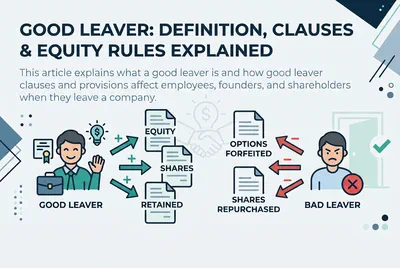
Good Leaver: Definition, Clauses & Equity Rules Explained
This article explains what a good leaver is and how good leaver clauses and provisions affect employees, founders, and shareholders when they leave a company.
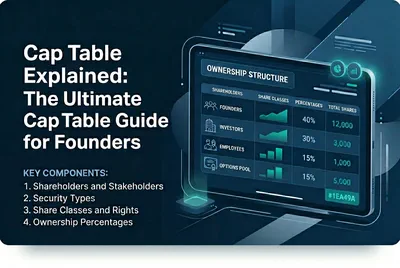
Cap Table Explained: The Ultimate Cap Table Guide for Founders
A cap table shows a startup’s ownership structure, including founders, employees, and investors, and explains how shares change through funding, dilution, and exits.
Secondary Market: Stock Trade Across Private Companies, NASDAQ & Private Market vs Primary Markets
Discover how secondary markets shape the trading of existing securities, improve liquidity, and enable investors to buy and sell stocks, bonds, and private assets based on market dynamics.
Ready to simplify your equity programs?
See how Incentrium helps you manage share-based compensation with ease. Book a demo to learn more.
Book a Demo