What Are Advisory Shares? Guide for Startups & Advisors
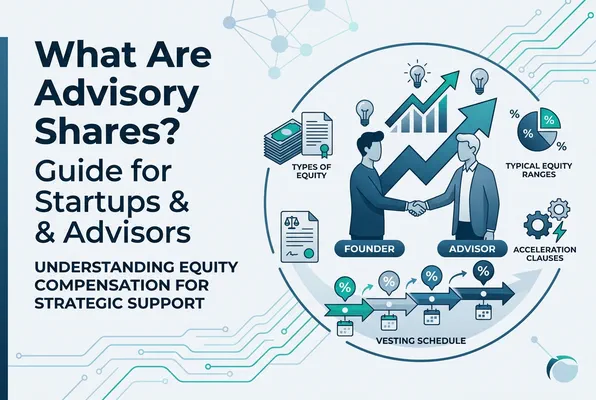

Advisory shares are one of the most powerful yet frequently misunderstood tools in the startup ecosystem. Whether you are a founder looking to attract seasoned mentors or an experienced professional being offered equity in exchange for guidance, understanding how advisory shares work is essential. This guide breaks down everything you need to know — from definitions and structures to vesting schedules, tax considerations, and best practices.
What Are Advisory Shares?
Advisory shares are a form of equity compensation granted to individuals, typically called advisors, in exchange for their strategic guidance, industry expertise, or professional network. Unlike employees or co-founders, advisors are not part of the core team and usually do not work for the company on a full-time basis. Instead, they offer periodic input, make introductions, lend credibility, or provide domain-specific knowledge that helps the startup grow.
Advisory shares can be structured as:
- Stock options: The right to purchase shares at a predetermined strike price after a vesting period
- Restricted Stock Awards (RSAs): Actual shares that transfer ownership immediately but may be subject to vesting restrictions
- Restricted Stock Units (RSUs): A promise to deliver shares upon meeting certain conditions
The choice of structure depends on the company’s stage, jurisdiction, and the specific arrangement negotiated with the advisor.
Type of Equity Compensation for Advisors
A common type of equity compensation used by startups is advisory shares. Companies often offer advisory shares to experienced professionals who provide valuable advisory services, strategic guidance, industry expertise, or access to important business networks. This form of equity compensation given to external experts allows startups to attract high-level support without increasing cash expenses. Unlike employees, advisors are typically not involved in daily operations but can contribute significant strategic insights that support the company’s long-term success.
Why Do Startups Use Advisory Shares?
Cash is often scarce at early-stage companies. Advisory shares allow startups to attract experienced professionals — former executives, domain experts, technical mentors, or well-connected investors, without depleting their runway. In return, advisors gain the opportunity to participate financially in a company’s potential upside.
Beyond the financial mechanics, advisory shares align incentives. When an advisor holds equity, they have a direct stake in the company’s success, making them far more motivated to provide meaningful, actionable support.
How Advisory Shares Work
Understanding the mechanics of advisory shares is crucial for both founders and advisors before entering any agreement.
Types of Advisory Shares and How They Work
There are several types of advisory shares, and startups can structure them in different ways depending on their goals. Advisors may receive advisory shares in the form of regular shares, stock options, or other forms of equity in the form of ownership rights. In many cases, advisors are granted options to buy shares rather than being given the actual shares immediately. These options provide the right to buy shares at a predetermined price after meeting certain conditions. Because advisory shares are often tied to performance and commitment, they usually include a vesting period for advisory shares to ensure that advisors earn their equity over time.
Typical Equity Percentages
The amount of equity granted as advisory shares is considerably smaller than what founders or early employees receive. Industry norms generally fall in the following ranges:
| Advisor Type | Typical Equity Range |
|---|---|
| Early-stage advisor (seed/pre-seed) | 0.25% – 1.0% |
| Growth-stage advisor (Series A/B) | 0.1% – 0.5% |
| Later-stage advisor (Series C+) | 0.05% – 0.25% |
| High-profile or highly specialized advisor | Up to 1.0% or more |
The actual grant size depends on several factors, including the advisor’s level of involvement, their seniority and reputation, the company’s current stage and valuation, and how much time the advisor is expected to commit.
A useful reference framework is the FAST Agreement (Founder/Advisor Standard Template), developed by the Founder Institute. It categorizes advisor relationships into three tiers — Idea Stage, Startup Stage, and Growth Stage — with corresponding equity ranges, giving both parties a standardized starting point for negotiations.
Vesting Schedules for Advisory Shares
Vesting is one of the most important elements of any advisory share agreement. It ensures that advisors earn their equity over time rather than receiving it all at once, protecting the company if the relationship does not work out as expected.
Common vesting arrangements include:
- Monthly vesting over 1–2 years: The most common structure for advisors, reflecting the shorter engagement horizon compared to full-time employees
- Quarterly vesting over 2 years: Used when companies want less administrative overhead
- Cliff periods: Some agreements include a 3–6 month cliff, meaning no equity vests until the advisor has been engaged for a minimum period
For comparison, standard employee equity typically vests over four years with a one-year cliff. Advisory vesting schedules are intentionally shorter because advisors provide value in bursts — making introductions, attending quarterly board meetings, or stepping in during critical decisions.
Acceleration Clauses
Some advisory share agreements include acceleration provisions. These clauses allow unvested shares to accelerate under specific circumstances, such as a company acquisition or an IPO. Both single-trigger acceleration (triggered by one event) and double-trigger acceleration (requiring two events) are used in advisory agreements, though they are more common in executive compensation.
The Advisory Share Agreement
Any equity grant to an advisor should be formalized through a written advisory share agreement. Relying on a verbal understanding or informal email exchange is a significant legal and business risk for both parties.
Key Components of an Advisory Agreement
A well-drafted advisory share agreement typically includes:
- Equity grant details: Type of shares, number of shares or percentage, and strike price if applicable
- Vesting schedule: Start date, duration, cliff (if any), and vesting frequency
- Advisor obligations: Expected time commitment, deliverables, and areas of focus
- Confidentiality provisions: Non-disclosure obligations to protect sensitive company information
- Intellectual property assignment: Clarifying that any work product created by the advisor belongs to the company
- Termination clauses: Conditions under which the relationship can be ended and how unvested shares are handled
- Governing law: The jurisdiction under which disputes will be resolved
Founders often use standardized templates like the FAST Agreement as a starting point, customizing them to reflect the specific nature of each advisory relationship.
Cap Table Implications
Advisory shares sit on the company’s cap table alongside founder shares, employee stock options, and investor equity. While individual advisory grants are small, they can accumulate if a company brings on many advisors. Founders should be mindful of how total advisor equity affects dilution and the overall cap table structure.
A healthy rule of thumb is to reserve no more than 1%–5% of the total equity pool for advisors, depending on company stage and strategy. Sophisticated investors will scrutinize a cap table with excessive advisory equity, as it may signal poor governance or overly generous equity distribution.
Equity Allocation and Dilution Considerations
When startups are issuing equity to advisors, they must carefully manage their overall equity allocation. The equity given to advisors represents a portion of the company’s equity, which can contribute to equity dilution for existing shareholders. While individual grants are typically small, multiple advisor grants can impact the cap table over time. For this reason, founders should evaluate how much equity granted to advisors is appropriate and ensure that advisory compensation remains aligned with the value delivered by company advisors.
Choosing the Right Advisors
Granting advisory shares is a significant commitment. Before issuing any equity, founders should assess whether a potential advisor genuinely brings value or simply adds a prestigious name to a pitch deck.
Qualities to Look for in an Advisor
- Relevant domain expertise: Have they built or scaled businesses in your industry?
- Network access: Can they make warm introductions to investors, partners, or potential customers?
- Availability and engagement: Are they willing to commit to regular check-ins and respond promptly?
- Strategic thinking: Can they challenge your assumptions and help you avoid costly mistakes?
- Compatibility: Do their values and working style align with your team’s culture?
Red Flags to Avoid
Not every advisor relationship creates value. Watch out for advisors who:
- Demand large equity stakes with no clear deliverables
- Are unwilling to sign a formal agreement
- Have many advisory roles that dilute their time and focus
- Cannot articulate specific ways they will help the company
The best advisory relationships are collaborative, specific, and driven by a mutual commitment to the company’s success.
Tax Considerations for Advisory Shares
Tax treatment is an area where many founders and advisors are underprepared. The tax implications of advisory shares depend heavily on the structure used and the jurisdiction involved.
Stock Options
If advisory shares are granted as non-qualified stock options (NSOs), the advisor is typically taxed at ordinary income rates when they exercise the options, based on the difference between the exercise price and the fair market value at the time of exercise. Any subsequent gain upon sale is then taxed as capital gains.
Restricted Stock Awards and the 83(b) Election
When advisory shares are issued as restricted stock, the advisor may have the option to file an 83(b) election with the IRS within 30 days of the grant. This election allows the advisor to pay ordinary income tax on the fair market value of the shares at the time of grant, rather than when they vest, which can be advantageous if the company’s value is expected to grow significantly.
Failing to file an 83(b) election when appropriate can result in a much larger tax bill down the line as the shares appreciate in value.
International Considerations
For companies and advisors outside the United States, tax rules vary significantly. In many European countries, for example, equity compensation is subject to income tax at the point of vesting or exercise. Founders operating in multiple jurisdictions should work with qualified legal and tax advisors to ensure compliance.
Advisory Shares vs. Consulting Agreements
A common question founders face is whether to compensate an external contributor with advisory shares, a cash consulting fee, or a combination of both.
| Advisory Shares | Cash Consulting | |
|---|---|---|
| Cash outlay | None | Immediate |
| Alignment of incentives | High | Lower |
| Advisor motivation | Long-term upside | Short-term deliverables |
| Administrative overhead | Higher (legal docs, cap table) | Lower |
| Best suited for | Strategic mentors, brand ambassadors | Project-based work |
In practice, many startup-advisor relationships use a hybrid model — a modest cash retainer plus a smaller equity grant — especially when the advisor is contributing significant time to specific projects.
Best Practices for Managing Advisory Share Programs
Set Clear Expectations From Day One
Ambiguity is the enemy of a productive advisory relationship. Before any equity changes hands, both parties should agree on:
- The frequency and format of advisor engagements (monthly calls, quarterly reviews, ad hoc introductions)
- Specific goals or milestones the advisor is expected to help achieve
- How performance will be evaluated and how the relationship can be terminated
Review and Refresh Advisor Relationships Regularly
As a company evolves, its needs change. An advisor who was invaluable during a pre-seed fundraising round may add less value once the company reaches product-market fit and is scaling rapidly. Founders should periodically review each advisory relationship and determine whether it still serves the company’s current priorities.
Offering a new grant, sometimes called an “equity refresh”, to high-performing advisors whose initial vesting has concluded is a common way to retain valuable long-term relationships.
Use Equity Management Software
Managing advisory shares manually through spreadsheets is error-prone and creates compliance risks. Dedicated equity management platforms like Incentrium help founders maintain an accurate, up-to-date cap table, automate vesting schedules, generate compliant documentation, and provide advisors with a clear view of their equity position.
Using purpose-built software also signals to investors that the company manages its equity responsibly, a factor that can meaningfully impact due diligence outcomes during funding rounds.
Document Everything
Every advisory share grant should be accompanied by a signed agreement before any equity is issued. Retroactively documenting equity arrangements is complicated, legally risky, and a serious red flag for investors and acquirers during due diligence.
Common Mistakes Founders Make With Advisory Shares
Even well-intentioned founders frequently make preventable errors when establishing advisory share programs. The most common include:
- Granting equity too quickly: Meeting an impressive advisor at a conference and promising equity before having a substantive working relationship
- No formal agreement: Relying on verbal commitments or informal emails
- Ignoring vesting: Issuing fully vested shares immediately, eliminating any incentive for ongoing engagement
- Over-diluting the cap table: Accumulating too many advisor grants that collectively consume a disproportionate share of the equity pool
- Choosing status over substance: Prioritizing a well-known name over an advisor who will genuinely commit time and effort
How Incentrium Supports Equity Management for Advisors
At Incentrium , we understand that managing advisory shares is just one part of a broader equity compensation strategy. Our platform enables startups and scale-ups to:
- Issue and track advisory share grants in real time
- Automate vesting schedules with full audit trails
- Generate investor-ready cap table reports
- Provide advisors with a transparent view of their equity stake
- Maintain compliance with local regulations across jurisdictions
Whether you are issuing your first advisory shares or managing a complex multi-tier equity program, Incentrium gives your team the clarity and control needed to make smart equity decisions.
Why Advisory Shares Create Alignment
One reason advisory shares are a type of compensation frequently used by startups is that they create strong alignment between advisors and founders. By providing advisors with equity in a business, companies encourage advisors to focus on sustainable growth rather than short-term outcomes. This approach can help reduce potential conflicts of interest while motivating advisors to contribute meaningful expertise and connections. Well-structured advisor shares often strengthen relationships with members of an advisory board, creating shared incentives that benefit both the company and the advisor over the long term.
Conclusion
Advisory shares represent a powerful mechanism for startups to access world-class expertise without spending cash they cannot afford to burn. When structured thoughtfully — with appropriate vesting schedules, clear agreements, and well-defined expectations — they create genuine alignment between a company and the mentors who help shape its trajectory.
For founders, the key is to be deliberate: grant advisory shares to people who will truly move the needle, protect the arrangement with proper documentation, and use equity management tools that keep your cap table clean and investor-ready. For advisors, understanding the mechanics of your equity grant — including vesting, tax implications, and exit scenarios — ensures you can make informed decisions about the opportunities you choose to support.
If you want to learn more about managing advisory shares and other forms of equity compensation, explore the resources available at Incentrium .
FAQ
What are advisory shares and how do they differ from founder shares?
Do advisory shares have a vesting schedule?
How much equity should you give an advisor?
Are advisory shares taxable?
Written by
Dominik KonoldCEO & Founder
Dominik Konold is the CEO and founder of Finidy GmbH, specializing in share-based compensation and treasury accounting. With a background in audit and investment banking, he is a certified Professional Risk Manager (PRMIA) and lectures for the Association of Public Banks and the Academy of International Accounting.
Related Posts

Best Equity Management Software for Startups 2026
Discover the best equity management software for startups. Compare top platforms, key features, cap table tools, and compliance capabilities to manage equity.
Cap Table Guide: What It Is & How It Works | Incentrium
All you need to about Cap Table as a Startup Founder
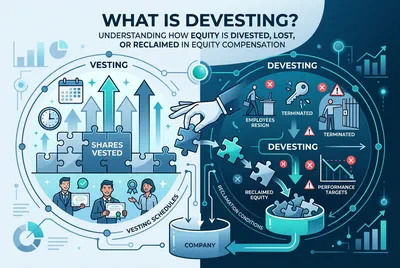
Devest Definition: What Does It Mean to Divest Equity and How Does Devesting Work?
This guide explains the concept of devesting in equity compensation, how it relates to vesting and employee share ownership, and why understanding the conditions under which equity can be lost or reclaimed is essential for employees, founders, and HR professionals.
Ready to simplify your equity programs?
See how Incentrium helps you manage share-based compensation with ease. Book a demo to learn more.
Book a Demo