What Is a Seed Round? A Complete Guide to Startup Seed Funding and Early-Stage Fundraising
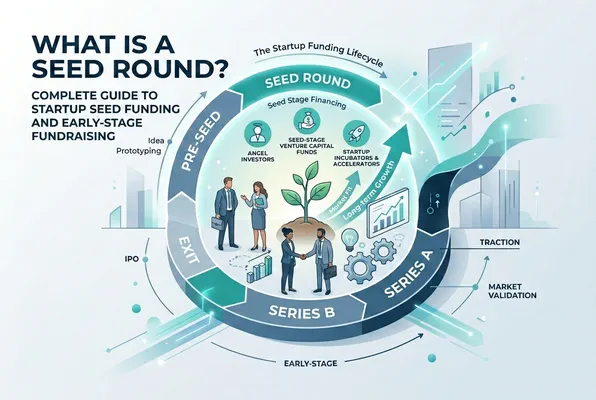

Raising capital is one of the most pivotal moments in any startup’s journey, and few milestones are as significant as securing a seed round. Whether you’re a first-time founder trying to understand the fundraising landscape or an experienced entrepreneur planning your next capital raise, understanding what a seed round is, and how to navigate one successfully, is essential knowledge.
This guide breaks down everything you need to know about seed rounds: what they are, how they work, who participates, what investors look for, and how to give your startup the best chance of closing one successfully.
What Is a Seed Round?
A seed round is the first significant round of external equity funding that a startup raises. Think of it as “planting the seed” of a company’s future growth, the capital injected at this stage is meant to help founders cultivate their idea from a concept into a viable business.
Seed funding typically comes after a founder has exhausted personal savings and contributions from friends and family (sometimes called pre-seed funding) but before the company is generating consistent revenue or ready for institutional venture capital at the Series A stage.
At its core, a seed round is about funding early-stage milestones: building a minimum viable product (MVP), testing product-market fit, hiring key early team members, and gathering enough traction to justify raising a larger follow-on round.
Pre-Seed and Seed Stage Financing
Pre-seed or seed funding is typically the first stage of funding and is often used to get a company off the ground and establish initial capital. At this pre-seed and seed stage, startup founders focus on business strategy, business plan development, and defining a clear seed level direction for growth. The difference between pre-seed and seed rounds compared shows how early risk is balanced against early validation, especially when securing initial traction.
The Seed Round in the Startup Funding Lifecycle
To fully understand what a seed round is, it helps to place it in the broader context of the startup funding lifecycle:
| Stage | Typical Amount | Purpose |
|---|---|---|
| Bootstrapping / Friends & Family | $0 – $150K | Validate the idea |
| Pre-Seed | $50K – $500K | Build prototype, early hires |
| Seed Round | $500K – $5M | Product development, market validation |
| Series A | $5M – $15M | Scale proven business model |
| Series B+ | $15M+ | Expand to new markets, rapid growth |
The seed round occupies a critical middle ground — it’s where a startup transitions from being just an idea on paper to a functioning business with real traction and proof points.
A Brief History of Seed Funding
The concept of seed funding has evolved significantly over the past two decades. In the early 2000s, seed rounds were rare and often lumped together with Series A. The emergence of Y Combinator in 2005 and the broader accelerator movement helped formalize seed-stage investing as its own distinct asset class.
The rise of instruments like SAFE notes (Simple Agreement for Future Equity), introduced by Y Combinator in 2013, further lowered the friction of seed deals and made it easier for small checks to flow into early-stage startups. Today, seed funding is a well-established and extremely active segment of the venture capital market, with hundreds of dedicated seed funds operating globally.
Who Invests in Seed Rounds?
One of the defining features of a seed round is the diversity of investor types involved. Unlike later-stage rounds dominated by institutional venture capital firms, seed rounds can involve a wide range of participants.
Seed Financing, Seed Fundraising and Market Fit
Seed funding is typically structured as a round of funding where investors in seed participate through safes and convertible notes or direct equity instruments. Seed financing and seed fundraising are funding is usually aimed at achieving market fit through market research and product development. During this phase, funding is often used to validate demand, while raising seed money helps startups build early traction and identify competitive advantage.
Angel Investors
Angel investors are high-net-worth individuals who invest their own personal capital into early-stage startups, often in exchange for equity or convertible notes. Many angels are former entrepreneurs or executives who bring not just money but also mentorship, networks, and domain expertise.
Angel investors are frequently the most accessible source of seed capital for first-time founders and are often willing to bet on a strong team even before there’s a polished product.
Seed-Stage Venture Capital Funds
Dedicated seed-stage VC funds have proliferated in recent years. These are institutional funds that specifically focus on the seed stage, writing checks typically ranging from $250,000 to $2 million. Notable examples include Precursor Ventures, Hustle Fund, and Backstage Capital.
Unlike later-stage VCs who require extensive traction data, seed funds are more comfortable making bets on founding teams and emerging market opportunities.
Accelerators and Incubators
Programs like Y Combinator, Techstars, and 500 Startups provide a combination of seed funding (typically $125,000 – $500,000), mentorship, and access to networks in exchange for a small equity stake. Graduating from a top accelerator can significantly boost a startup’s credibility and open doors to follow-on funding.
Micro-VCs
Micro-VCs are smaller venture funds (typically managing $10M – $100M) that focus exclusively on early-stage deals. They fill the gap between individual angels and larger institutional funds, often leading seed rounds or co-investing alongside angels.
Crowdfunding Platforms
With the rise of equity crowdfunding platforms like Republic, Wefunder, and SeedInvest, startups now have the option to raise seed capital from a large pool of smaller investors. This approach can also double as a marketing and community-building exercise, though it comes with additional regulatory requirements.
How Does a Seed Round Work?
Understanding the mechanics of a seed round helps demystify the process for founders approaching fundraising for the first time.
Series Funding and Growth Rounds
Series funding represents the stage of funding that follows seed investment, including series a funding, series b, and series c. Series a financing is focused on business development and scaling, while series b and raise series activities support expansion and further growth. Venture capitalists and vc firms typically lead these later round of funding stages, helping startups move toward a successful business model and strengthen their stake in the company.
Step 1: Preparing Your Fundraise
Before approaching any investor, you need to have your fundamentals in order:
- A compelling pitch deck that tells the story of the problem, solution, market opportunity, business model, traction, and team
- A clear ask — how much you’re raising and what you’ll use it for
- Financial projections that show how the funding will be deployed and what milestones it will help you reach
- Data room documentation including incorporation documents, cap table, and any existing contracts or IP
Step 2: Choosing the Right Funding Instrument
Seed rounds can be structured in several ways:
Equity Rounds: In a priced equity round, the company is given a formal valuation and investors receive shares in exchange for their investment. This is more common in larger seed rounds and provides clarity on ownership from day one.
Convertible Notes: A convertible note is a form of short-term debt that converts into equity at a future funding round (typically the Series A), usually at a discount to the next round’s valuation. Convertible notes include an interest rate and a maturity date.
SAFE Notes (Simple Agreement for Future Equity): SAFEs are the most popular instrument for early seed rounds today. They function similarly to convertible notes but are simpler — they’re not debt and don’t carry interest rates or maturity dates. SAFEs convert into equity at the next priced round, usually with a valuation cap and/or a discount rate.
Step 3: Determining Your Valuation Cap
If you’re raising on a SAFE or convertible note, you’ll need to set a valuation cap — the maximum company valuation at which the investor’s note will convert into equity. A lower cap is more favorable to investors; a higher cap is more favorable to founders.
Getting the valuation cap right is a delicate balance. Too high, and investors won’t see enough upside; too low, and founders give away too much ownership.
Step 4: Finding and Pitching Investors
Sourcing investors is often the most time-intensive part of the seed round process. Strategies include:
- Leveraging warm introductions through your network
- Attending startup events and demo days
- Using platforms like AngelList, LinkedIn, and Crunchbase to identify relevant investors
- Applying to accelerator programs
- Engaging with founder communities where investors are active
Step 5: Due Diligence and Term Negotiation
Even at the seed stage, investors will conduct basic due diligence — reviewing your business model, market opportunity, team backgrounds, and any legal or IP issues. Be prepared to answer detailed questions about your assumptions and plans.
Once an investor is interested, you’ll negotiate key terms including:
- Investment amount
- Valuation cap or pre-money valuation
- Discount rate (for convertible instruments)
- Pro-rata rights (the right to participate in future rounds)
- Board seats or observer rights
Step 6: Closing the Round
Seed rounds rarely close all at once. Most are structured as rolling closes, where you bring in money as each investor commits, rather than waiting until all capital is committed before accepting any funds. This allows you to start deploying capital sooner.
Once all documents are signed and funds are wired, congratulations — you’ve closed your seed round.
What Do Seed Investors Look For?
Investors evaluating seed-stage startups are making bets under significant uncertainty. With limited financial history and often no revenue, they focus on a set of qualitative and early quantitative signals.
The Founding Team
At the seed stage, the team is often the most important factor. Investors ask: Does this team have the right combination of domain expertise, technical ability, and resilience to navigate the inevitable challenges ahead? A strong co-founder dynamic, relevant industry experience, and a track record of execution all matter enormously.
Market Size and Opportunity
Seed investors — especially those backed by venture capital structures — need to believe that a startup has the potential to become very large. They typically look for startups addressing large total addressable markets (TAMs), usually in the billions of dollars, because only large markets can produce the outsized returns that justify the risk.
Product and Technology Differentiation
What unique insight does the startup have? Is there proprietary technology, a novel business model, or a unique go-to-market approach that competitors can’t easily replicate? Defensibility matters even at this early stage.
Early Traction and Validation
While seed-stage companies aren’t expected to have hockey-stick growth, early traction signals are incredibly compelling. This could mean:
- A growing waitlist
- Strong user engagement metrics
- Initial revenue or letters of intent from customers
- High retention rates
- Positive user feedback and testimonials
Product-Market Fit Indicators
Investors want evidence, even preliminary, that you’re solving a real problem for a real audience. Early user interviews, pilot programs, and beta test results all contribute to this picture.
Seed Round Valuation: How Is It Determined?
Seed round valuations are more art than science, particularly because most seed-stage companies lack significant financial history. Valuations are influenced by:
- Market comparables: What are similar startups in your space raising at?
- Team quality and track record: A team of serial entrepreneurs commands a premium
- Traction: Revenue, users, and growth metrics all justify higher valuations
- Market timing: Hot sectors attract higher valuations
- Investor competition: Multiple interested investors can drive up your valuation
- Geographic market: Seed valuations in Silicon Valley tend to be higher than in other markets
Typical pre-money valuations for seed rounds currently range from $5 million to $20 million, though outliers exist in both directions. Founders should research comparable deals in their sector and geography using resources like Crunchbase, PitchBook, or AngelList.
Common Seed Round Mistakes to Avoid
Even experienced founders make mistakes during their seed raise. Here are the most common pitfalls to watch out for:
Raising Too Little (or Too Much)
Raising too little capital leaves you runway-constrained before you can hit meaningful milestones. Raising too much at a high valuation can make future rounds difficult if growth doesn’t meet expectations (known as a “down round” scenario). Aim to raise 18–24 months of runway based on realistic spending projections.
Neglecting the Cap Table
Every early decision about equity has long-term consequences. Giving away too much equity in the seed round leaves less room for future investors and can demotivate founders over time. Always model the full dilution impact of your raise before agreeing to terms.
Pitching the Wrong Investors
Not every investor is the right fit for your stage, sector, or geography. Spending significant time pitching late-stage VCs on a seed-stage deal, or approaching investors with no experience in your domain, is inefficient. Do thorough research to build a targeted list of investors who have a history of investing at your stage and in your sector.
Ignoring Legal and Compliance Issues
Seed rounds involve legal documentation that will follow your company for its entire life. Using poorly drafted documents, misunderstanding SAFE terms, or failing to address IP assignment issues can create serious problems down the road. Always work with experienced startup lawyers.
Lack of a Clear Use of Funds
Investors want to know exactly how their capital will be deployed. A vague answer like “product development and marketing” is insufficient. Be specific about the milestones you expect to achieve with the funding and how each dollar will be allocated.
Seed Round vs. Pre-Seed: What’s the Difference?
The line between a pre-seed and seed round has blurred in recent years, but there are meaningful distinctions:
Pre-Seed Round: - Typically raises $50,000 – $500,000 - Often from friends, family, angels, or micro-funds - Company may just have an idea or early prototype - Used to build MVP and test early assumptions - Usually structured as SAFEs or convertible notes with low valuation caps
Seed Round: - Typically raises $500,000 – $5 million - Involves angel investors, seed funds, and sometimes early-stage VCs - Company has an MVP and early user or revenue traction - Used to accelerate product development and validate go-to-market - Can be priced equity round or convertible instruments
Think of pre-seed as the round that gets you to the starting line of a seed round.
How Equity Compensation Software Supports Seed-Stage Startups
One often-overlooked aspect of raising a seed round is the administrative and governance infrastructure it requires. Once you’ve taken on external investors, you have new obligations: tracking ownership, issuing equity to employees, and maintaining an accurate cap table.
This is where equity compensation management platforms become invaluable. Tools designed for early-stage startups can help founders:
- Model funding scenarios before and during the raise
- Manage cap tables accurately as new shares and instruments are issued
- Issue stock options and equity grants to employees compliantly
- Prepare for future rounds with clean, investor-ready documentation
For seed-stage startups, getting equity management right from day one prevents costly mistakes that become increasingly difficult to unwind as the company grows. Platforms like Incentrium are built specifically to help early-stage companies manage their equity programs efficiently and transparently.
After the Seed Round: What Comes Next?
Closing your seed round is a major milestone, but the real work begins immediately afterward. Here’s what to focus on:
Execute Against Your Milestones
Investors funded you based on a plan. Now is the time to execute relentlessly against the milestones you committed to. Track key metrics weekly, communicate proactively with your investors, and don’t hesitate to adjust your strategy when the data demands it.
Build Investor Relationships
Your seed investors are long-term partners. Keep them informed with regular updates (monthly is best practice), ask for introductions and advice, and involve them in key decisions where appropriate. Engaged seed investors can be enormously helpful when you start raising your Series A.
Start Planning Your Series A
The best Series A processes start 12–18 months before you actually need the money. Use your seed round runway to hit the metrics (typically $1M–$2M ARR for SaaS companies) that will make you competitive for Series A. Begin building relationships with Series A investors well before you’re ready to pitch.
Hire Thoughtfully
Early hires have an outsized impact on company culture and trajectory. Use your seed capital to bring on a small number of exceptionally talented people rather than scaling headcount prematurely.
Investors, Strategy and Startup Financing
Potential investors evaluate startup founders based on financing structure, cash flow, and the ability to secure funding or secure additional funding when needed. Funding is typically the first step, but additional funding is often required to sustain growth. At this stage, hundreds of thousands of dollars may be raised to support startup seed development, ensuring the company has enough resources for different funding paths and long-term business development.
Key Takeaways
Understanding what a seed round is, and how to approach one strategically, can mean the difference between a successful fundraise and months of wasted effort. Here’s a summary of the key points:
- A seed round is the first significant equity funding round for a startup, typically raising $500K – $5M
- It’s used to build an MVP, validate product-market fit, and hire early team members
- Common investors include angel investors, seed VCs, accelerators, and micro-VCs
- Deals are often structured as SAFE notes, convertible notes, or priced equity rounds
- Investors at the seed stage prioritize the founding team, market size, differentiation, and early traction
- Getting equity management infrastructure right from day one is critical for long-term success
Whether you’re preparing to raise your first seed round or optimizing for a future raise, the fundamentals remain constant: know your numbers, tell a compelling story, target the right investors, and build the operational infrastructure that will support your growth for years to come.
FAQ
What is a seed round in startup funding?
How much money can you raise in a seed round?
What do investors get in a seed round?
What is the difference between a seed round and a Series A round?
Written by
Dominik KonoldCEO & Founder
Dominik Konold is the CEO and founder of Finidy GmbH, specializing in share-based compensation and treasury accounting. With a background in audit and investment banking, he is a certified Professional Risk Manager (PRMIA) and lectures for the Association of Public Banks and the Academy of International Accounting.
Related Posts
Best Equity Management Software for Startups 2026
Discover the best equity management software for startups. Compare top platforms, key features, cap table tools, and compliance capabilities to manage equity.
Advisory Shares: Complete Guide for Startup Founders
Everything founders, advisors and investors need to know about the scope of application and functioning of advisory shares.
Cap Table Guide: What It Is & How It Works | Incentrium
All you need to about Cap Table as a Startup Founder
Ready to simplify your equity programs?
See how Incentrium helps you manage share-based compensation with ease. Book a demo to learn more.
Book a Demo